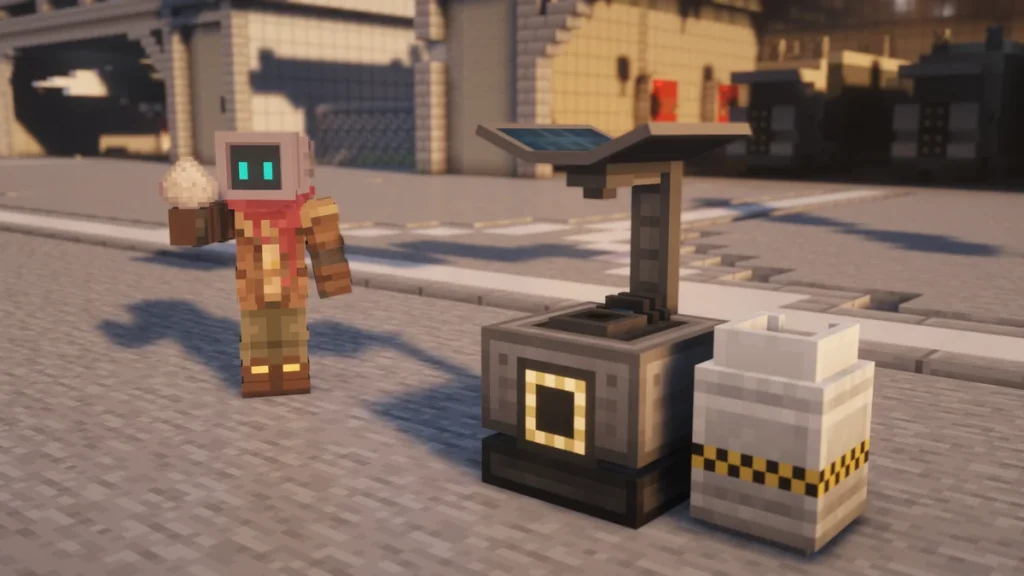
The  Solar Neutron Activator is a Mekanism machine that uses sunlight to change one chemical into another. It has two jobs, as it’ll turn Lithium into Tritium for a Fusion Reactor, and Nuclear Waste into Polonium for the late game. It doesn’t use any power to do either, but it’ll only work during the day with open sky above it.
How fast it runs depends on where it’s been built. The most it’ll manage is 64 mB a tick in a neutral biome at noon, with cold and dry biomes getting more than that and hot or wet ones getting less. It can’t be sped up with upgrades, so if you need more Tritium then you’ll have to build more of them.
How to Make It
You’ll need 2  Reinforced Alloys, an
 HDPE Sheet, 2
 Elite Control Circuits, a
 Steel Casing and 3
 Bronze Ingots to craft one. The HDPE Sheet is what holds most players up, as it means the HDPE line has to be running first, which in turn needs Ethene.


The machine is 2 blocks tall once it’s been placed, so you’ll want to leave an empty space above where it’s going. Its panel sits in that upper block, and that’s the part of it which has to be able to see the sky, so it’s best built out in the open.
How It Works
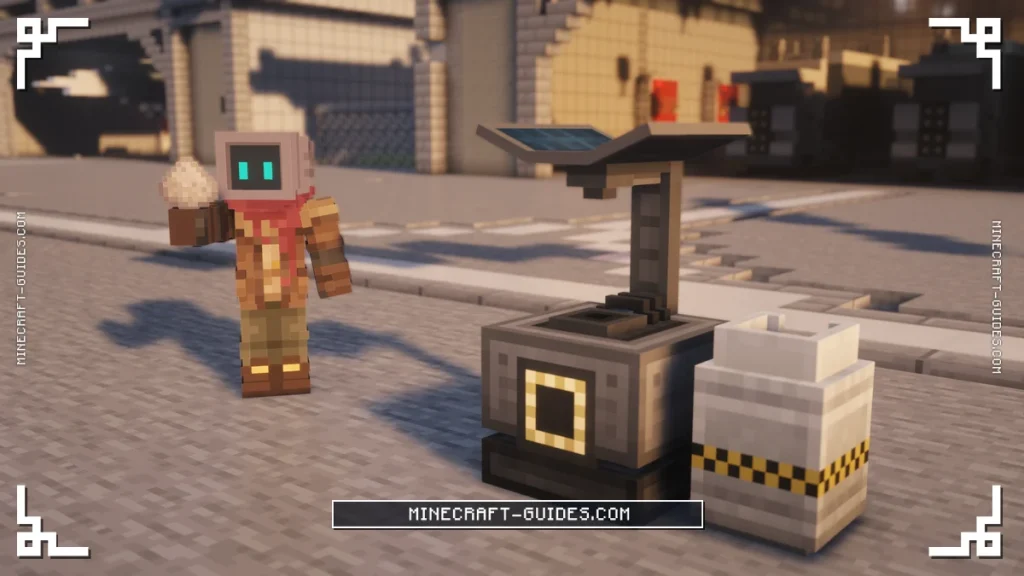
There are only two recipes that the Solar Neutron Activator is able to run, and they both take a chemical in and give a different one back out. It has a 10-bucket tank for each of them, and it’ll work on whatever is in the input tank for as long as the sun is on it.
| In | Out | Used for |
|---|---|---|
| 1 mB Lithium | 1 mB Tritium | D-T Fuel for the Fusion Reactor |
| 10 mB Nuclear Waste | 1 mB Polonium | Polonium Pellets and the SPS |
For it to count as being in the sun, it has to be daytime in a dimension that has a sky, and there can’t be anything built over the panel. That rules out the Nether and the End completely, as well as anywhere that’s underground. It won’t do anything at all at night either, and a heavy storm might be dark enough to stop it as well.
Speed by Biome
The rate starts from 64 mB a tick and is then adjusted by the biome’s temperature and how much rain it gets. Colder is better, and drier is better as well, although deserts lose more from the heat than they gain from being dry. These are the peak rates at noon in some of the biomes you’re likely to be building in.
| Biome | Tritium at noon |
|---|---|
| Snowy Taiga | 81 mB/t |
| Frozen Peaks, Jagged Peaks | 75 mB/t |
| Snowy Plains, Ice Spikes | 69 mB/t |
| Plains | 56 mB/t |
| Forest | 50 mB/t |
| Swamp | 46 mB/t |
| Desert, Badlands, Savanna | 40 mB/t |
It’ll only reach those numbers in the middle of the day though. The rate follows the sun, so it climbs through the morning and then falls away again in the afternoon, and it’s down to about a fifth of the peak around sunrise and sunset. Rain will cut whatever it’s making to a fifth as well, in any biome where it’s able to rain.
Polonium is made at the same rates as Tritium, but it needs ten times as much going in. So an activator in Plains will use 560 mB of Nuclear Waste a tick at noon, which gives 56 mB of Polonium.
Making Tritium
Tritium is the reason most players build one. The Lithium comes from a Thermal Evaporation Plant, as Liquid Lithium that’s been put through a  Rotary Condensentrator, and it’s converted 1 to 1. You’ll then pipe the Tritium to the Fusion Reactor, or mix it with Deuterium in a
 Chemical Infuser to fill a
 Hohlraum.
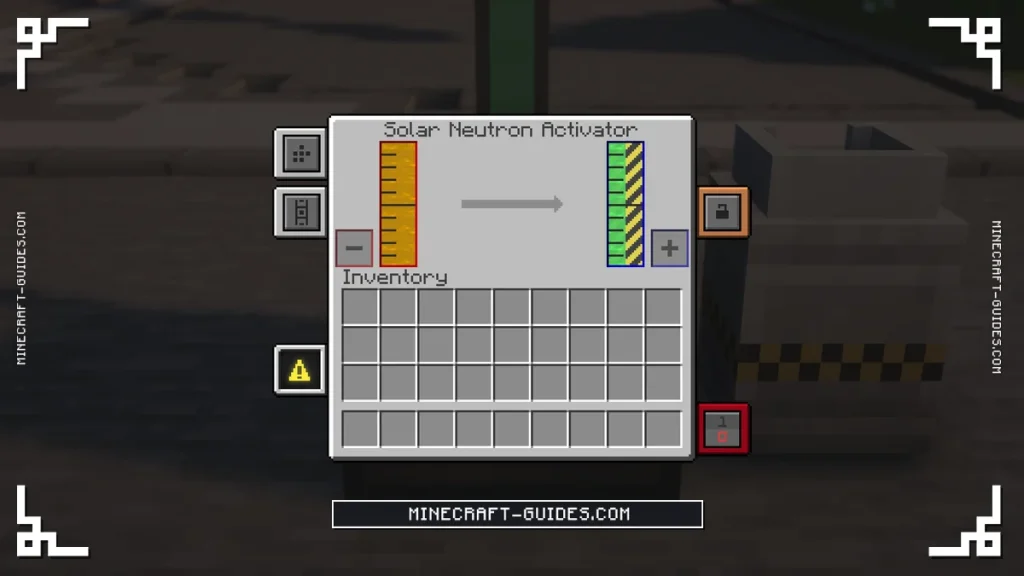
A Fusion Reactor that’s set to its highest injection rate will burn through 49 mB of Tritium a tick, and it does that all day and all night. A single activator in Plains only peaks at 56 and makes nothing in the dark, so one of them won’t be able to keep up. You’ll want to build several, and save the extra in Chemical Tanks to cover the night.
Making Polonium
The second recipe is how you’ll deal with the waste from a Fission Reactor. It takes 10 mB of Nuclear Waste for each 1 mB of Polonium, which is then made into  Polonium Pellets or sent to the SPS to make Antimatter.
Nuclear Waste is radioactive, so it can’t be stored in a Chemical Tank on the way. It should be piped straight from the reactor, or from a  Radioactive Waste Barrel, into the activator through Pressurized Tubes. Nuclear Waste covers the other things that you’re able to do with it.
Upgrades and Automation
The Solar Neutron Activator doesn’t accept any upgrades, and there’s no power connection to worry about. Chemicals go in and out through its sides, which are set in the Side Config tab, as the top is taken up by the panel. The output is pushed out of the front by itself, so a tube there is all it needs.
A Comparator against it will read how full the input tank is, which is handy for telling when the Lithium supply has fallen behind. As the rate is fixed by the biome, the only real way to get more out of one is to move it somewhere colder. With Tritium sorted, the Fusion Reactor is the next thing to build.
FAQ
It only runs in daylight with open sky directly above its panel, so check that nothing has been built over it. It won’t work at night, underground, or in the Nether and the End either. If the sun is out, then look at the tanks, as it’ll stop when the output is full, like when there’s no tube on the front to take it away.
It doesn’t use any energy at all, as sunlight is the only thing that drives it. That’s also why it can’t take Speed or  Energy Upgrades, so the rate you get is down to the biome and the time of day.
Cold biomes are the best, with a Snowy Taiga reaching 81 mB a tick at noon whereas Plains gets 56 and a Desert only 40. Dry weather helps as well, as rain cuts the rate to a fifth while it lasts.
Tritium comes from Lithium in a Solar Neutron Activator, which converts it 1 to 1 during the day. The Lithium itself is made by boiling Water down to Brine and then to Liquid Lithium in a Thermal Evaporation Plant, and running that through a Rotary Condensentrator.