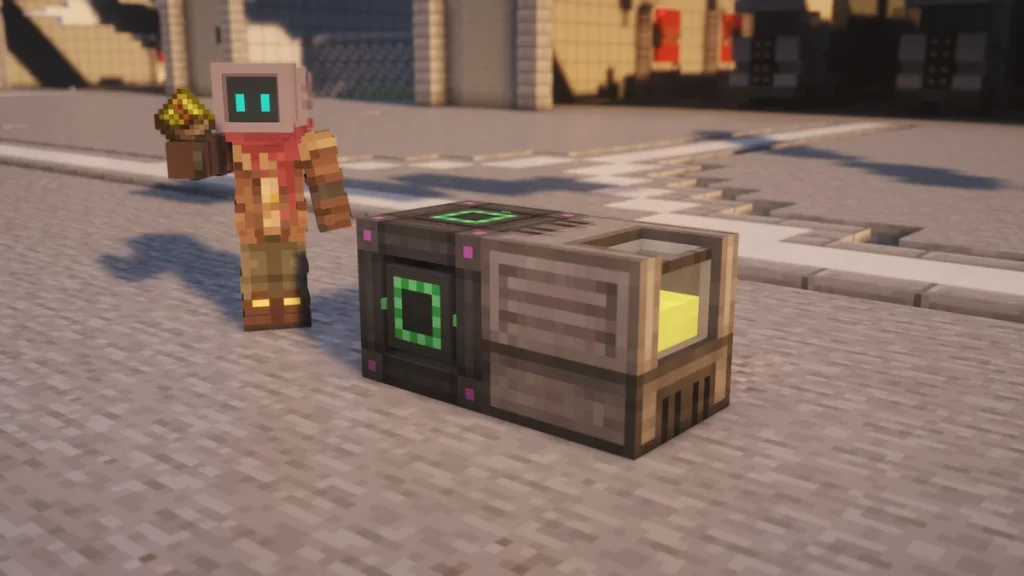
The  Bio-Generator is a Mekanism generator that burns
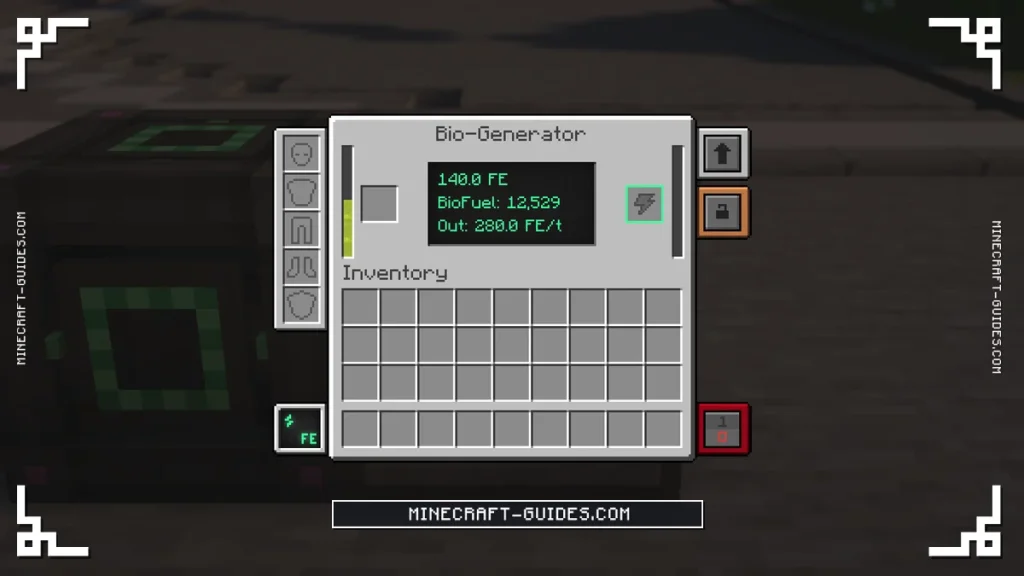
 Bio Fuel for a steady 140 FE/t (350 J/t), which is over three times what a
 Heat Generator makes. Bio Fuel comes from putting crops and other plants through a
 Crusher, so a farm is all it needs. You might see it called a biofuel generator, but in game the fuel is written as two words.
Each Bio Fuel lasts 10 seconds and gives 28,000 FE, and the output doesn’t change with the time of day, the biome or the height. A single  Melon or
 Pumpkin will crush into 6 Bio Fuel, which is a whole minute of power from one block.
How to Make It
The recipe has  Redstone Dust either side of an
 Infused Alloy on the top row, then 2 Bio Fuel around a
 Basic Control Circuit, and 2
 Iron Ingots around a second Infused Alloy on the bottom. You’ll need a Crusher before you can craft it, as the recipe uses Bio Fuel itself.




Nine Bio Fuel can be crafted into a  Block of Bio Fuel and back again, which is handy for storing it. The generator will burn the block whole and count it as nine, so there’s nothing lost by packing it up first.
How It Works
Bio Fuel placed in the slot is turned into Bioethanol inside the generator, at 200 mB for each one, and the tank holds enough for 120 of them. That’s 20 minutes of running from a full tank, and it’ll keep pulling more from the slot as the tank empties.

Power comes out of the front face only, and the generator pushes it into whatever is there. It also won’t burn anything while its 64,000 FE buffer is full, so no Bio Fuel is wasted when your machines are idle.
Bioethanol
Nothing else in Mekanism makes Bioethanol, as it only exists inside the generator’s own tank and can’t be pumped back out. There is a  Bioethanol Bucket in creative mode, and the tank will accept the fluid from a pipe, but in survival the only way to fill it is with Bio Fuel.
Getting Bio Fuel
Almost anything that grows can go through the Crusher, which takes 10 seconds for each item. What matters is how much Bio Fuel each one gives, as most crops are worth 2 whereas some farm blocks are worth a lot more.
| Bio Fuel | From One |
|---|---|
| 18 | Hay Bale or Nether Wart Block, as 2 Blocks of Bio Fuel |
| 9 | Dried Kelp Block, as 1 Block of Bio Fuel |
| 7 | Pumpkin Pie |
| 6 | Melon, Pumpkin or Cake |
| 4 | Bread, Shroomlight or Warped Wart Block |
| 2 | Wheat, Carrot, Potato, Beetroot, Cactus, Nether Wart, Cocoa Beans, Apple, Bamboo or Kelp |
| 1 | Sugar Cane, Melon Slice, seeds, saplings, mushrooms, berries, small flowers or Rotten Flesh |
Leaves are the poor choice here, as it takes 10 of them to make a single Bio Fuel, and  Cookies need 4 to make 3. The Melon and the Pumpkin are the ones to farm, since both give 6 from a block which can be harvested by a
 Piston or another mod’s harvester without replanting.
A  Hay Bale is worth the same 2 for each
 Wheat that went into it, but the Crusher takes the whole bale in one go and hands back 2 Blocks of Bio Fuel. That’s 18 Bio Fuel every 10 seconds, which is three times what the same Crusher makes from Melons, so it’s worth packing a Wheat farm into bales first.
A Crusher working through Melons will turn out 6 Bio Fuel every 10 seconds, which is exactly what six Bio-Generators burn in that time. That’s 840 FE/t from a machine that only uses 20 FE/t itself.
 Rotten Flesh works as well, so a mob farm is able to feed a generator if you’ve got one already. On 1.20.1 most of these yields are higher, although a Hay Bale only gave 7, and the slot only takes loose Bio Fuel, so you might see different numbers in an older pack.
Bio-Generator or Ethene
Bio Fuel has a second use, which is making Ethene (called Ethylene in older versions) in the  Pressurized Reaction Chamber. Two Bio Fuel with a little Water and Hydrogen will give 100 mB of Ethene, and that’s worth about 1,128,000 FE in a
 Gas-Burning Generator.
The same two Bio Fuel are only worth 56,000 FE in a Bio-Generator, so the Ethene route gives roughly twenty times more from the same farm. Most players will run Bio-Generators first, as they’re cheap, and then send the Bio Fuel to an Ethene setup once they have the machines for it.
Upgrades and Automation
The  Muffling Upgrade is the only upgrade that fits, as with every generator in the mod. Bio Fuel can be inserted from the top, bottom, back, front or left, so a
 Hopper on top or a Logistical Transporter from the Crusher will keep it stocked.
A Comparator next to it reads how full the tank is, and there’s a redstone control setting in the screen as well. Remember that the Crusher won’t push its Bio Fuel out by itself, as items never leave a Mekanism machine until auto-eject is turned on in the side configuration.
Six Bio-Generators and a Melon farm will carry you a long way, but they won’t keep up with the later machines. The next step is the Gas-Burning Generator, which burns the Ethene that’s made from the same Bio Fuel.
FAQ
Bio Fuel is made in the Crusher from plants and food, like Wheat,  Carrots, saplings and seeds. Melons and Pumpkins are the best ones to farm as each block gives 6 Bio Fuel, whereas most crops give 2 and things like seeds or
 Sugar Cane only give 1.
It makes a flat 140 FE/t, or 350 J/t, for as long as it has fuel. One Bio Fuel lasts 10 seconds and gives 28,000 FE in total, and a Block of Bio Fuel is worth nine of them, so that’s 252,000 FE from a single block.
There’s no machine that makes Bioethanol, as the Bio-Generator creates it inside its own tank from the Bio Fuel in its slot. Each Bio Fuel becomes 200 mB, and it can’t be taken out again, so you only ever need to deal with the item.
A Bio-Generator makes 140 FE/t wherever it’s placed, whereas a  Wind Generator has to stand above Y 220 or so to match that. The Wind Generator doesn’t need feeding though, so it depends on whether you’d rather build a farm and Crusher or a tall tower.