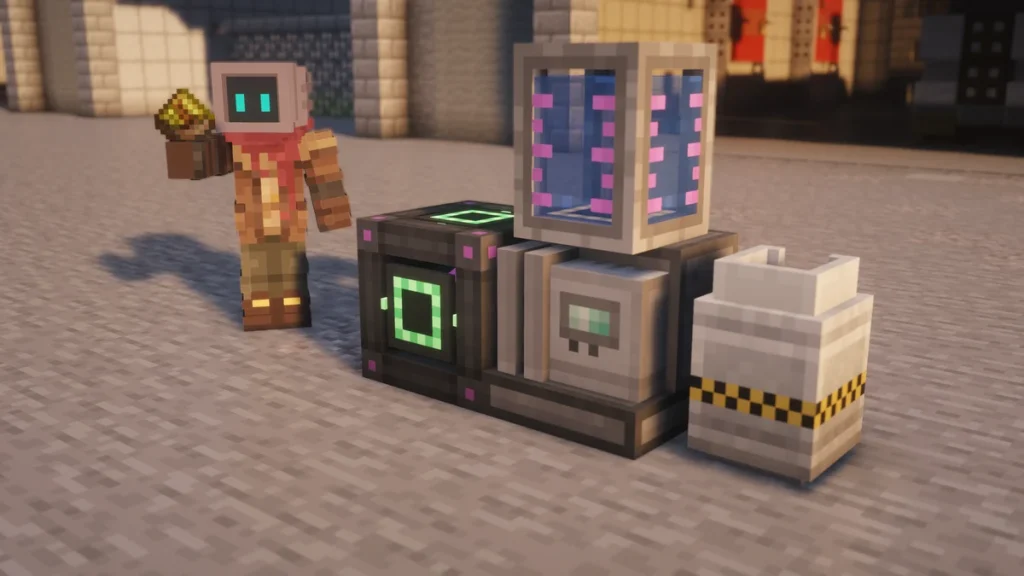

Ethene is a Mekanism chemical that’s burned for power in a  Gas-Burning Generator, and it was called Ethylene in older versions of the mod. To make it you’ll need a
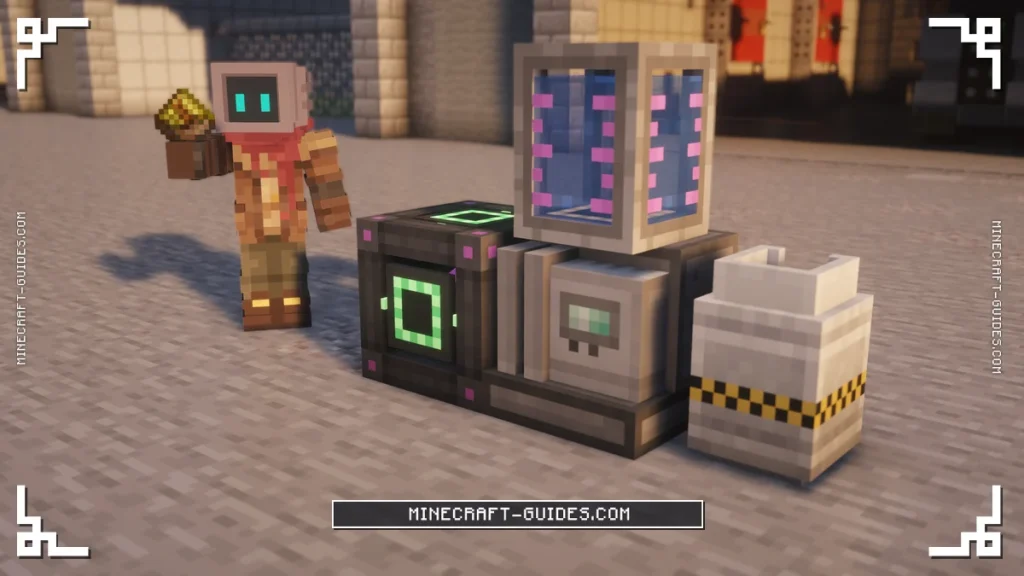
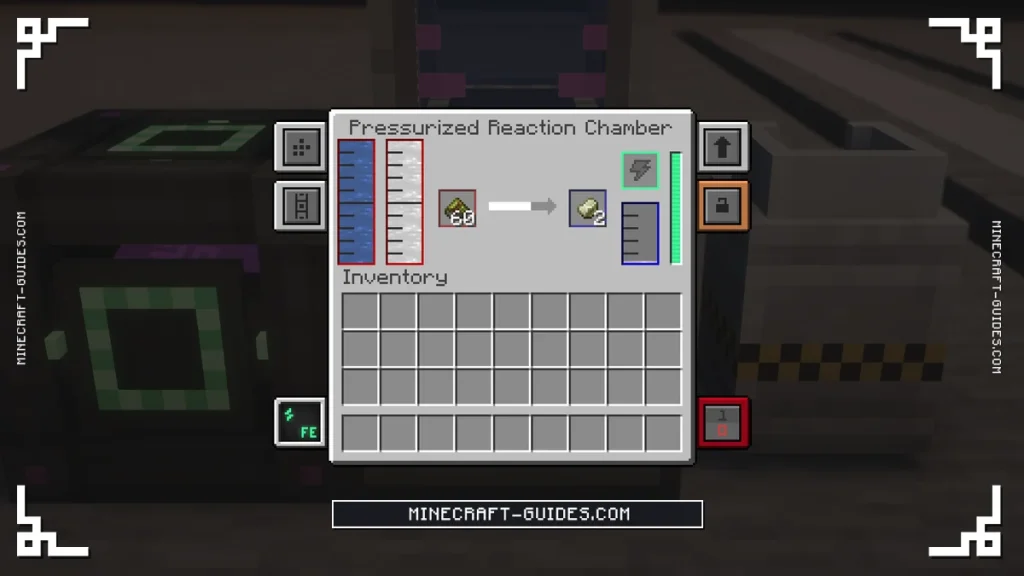
 Pressurized Reaction Chamber, which turns 2
 Bio Fuel, 10 mB of Water and 100 mB of Hydrogen into 100 mB of Ethene every 5 seconds.
It’s the fuel that most players will move to after their first generators, as 1 mB of it burns for 11,280 FE (28,200 J), which is 141 times what the same amount of Hydrogen would give you. One chamber with no upgrades is able to make enough to run a generator at about that much every tick, and the whole plant will keep itself going once it’s been started.
How to Get It
There are three things to bring together, and each of them comes from its own machine. Bio Fuel comes from plants and food in a Crusher, Hydrogen comes from Water in an Electrolytic Separator, and the Water for both the separator and the chamber is pumped by an  Electric Pump.
| Item | Fluid | Chemical | Makes | Time | Energy |
|---|---|---|---|---|---|
| 2 Bio Fuel | 10 mB Water | 100 mB Hydrogen | 100 mB Ethene + 1 Substrate | 5 s | 2 FE/t |
| 1 Substrate | 200 mB Water | 100 mB Ethene | 8 Substrate + 10 mB Oxygen | 20 s | 82 FE/t |
| 1 Substrate | 50 mB Liquid Ethene | 10 mB Oxygen | 1 HDPE Pellet | 3 s | 402 FE/t |
The first row is the one that makes Ethene, and it’s very cheap to run, as the chamber barely uses any power. Hydrogen is piped into its chemical tank with a Pressurized Tube, Water goes into the fluid tank, and the Bio Fuel goes in the item slot. The chamber pushes the Ethene out of its right side by itself, so that’s where the tube to the generator goes.
Bio Fuel for the chamber
One chamber will get through 24 Bio Fuel a minute, so the crop that you decide to crush matters quite a lot. A  Melon or a
 Pumpkin gives 6 Bio Fuel each,
 Bread gives 4, and most crops like
 Wheat,
 Carrots,
 Potatoes and
 Kelp give 2. Seeds, saplings and
 Sugar Cane will only give you 1. On 1.20.1 most crops and a Melon were all worth 5.
A  Crusher takes 10 seconds for each item when it has no upgrades, so one of them that’s fed with Melons will make 36 Bio Fuel a minute, which is enough for one chamber with some left over. If it’s fed with Wheat then it’ll only manage 12 a minute, so you’d want a couple of
 Speed Upgrades in it, and the
 Bio-Generator page lists what every plant is worth.
Hydrogen for the chamber
The Hydrogen that the chamber uses for each batch works out at 1 mB a tick. An  Electrolytic Separator with no upgrades makes twice that, so a single separator will be able to keep two chambers supplied. Make sure to set its Oxygen tank to Dumping though, as otherwise that tank will fill up and the Hydrogen stops as well.
Every batch of Ethene also leaves 1 Substrate in the output slot, and the chamber stops once that stack is full. Pull it out with a Logistical Transporter or turn on item auto-eject into a  Chest, and keep it for HDPE later on.
So each batch of Ethene costs about 8,000 FE worth of Hydrogen, and it gives back over a million when it’s burned. That’s why Hydrogen isn’t really worth burning by itself, as it will only return the 80 FE per mB that the separator spent on it in the first place.
How to Use It
Ethene is piped straight into a Gas-Burning Generator, which will burn it faster the fuller its tank is. In practice the generator tends to settle at whatever you’re feeding it, so 1 mB a tick from one chamber gives you about 11,280 FE/t, and it’ll stop burning altogether when there’s nothing using the power.
Ethene Power Line



The Hydrogen comes from an Electrolytic Separator fed by an Electric Pump.
The most that one generator is able to burn is 6.4 mB a tick, which is 72,192 FE/t with a full tank. To reach that from a single chamber you’d need to put 7 Speed Upgrades in it, and it’ll then want a lot more Bio Fuel, at about three stacks a minute, as well as a separator with 2 Speed Upgrades to keep up with the Hydrogen.
| Machine | Makes | Uses | Energy |
|---|---|---|---|
| Electric Pump | 52 mB/t Water | One Water source | 40 FE/t |
| Electrolytic Separator | 2 mB/t Hydrogen | 2 mB/t Water | 160 FE/t |
| Crusher (Melons) | 36 Bio Fuel a minute | 6 Melons a minute | 20 FE/t |
| Pressurized Reaction Chamber | 1 mB/t Ethene | 24 Bio Fuel a minute, 1 mB/t Hydrogen | 2 FE/t |
| Gas-Burning Generator | 11,280 FE/t | 1 mB/t Ethene | None |
All of those machines together will draw about 220 FE/t, so nearly everything the generator makes is yours to use. You’ll need some other power to get it started, like a  Heat Generator, and it’s worth having an Energy Cube between the generator and the plant, which stops it stalling if the Bio Fuel runs low for a moment.
Liquid Ethene and HDPE
The other use is HDPE, and that recipe wants Ethene as a fluid. You’ll send it through a  Rotary Condensentrator first, which gives Liquid Ethene at 1 mB for 1 mB, and then a second chamber takes 50 mB of it with 10 mB of Oxygen and 1
 Substrate for each
 HDPE Pellet.
That fluid form is also what a  Liquid Ethene Bucket holds, which you’re able to fill from the condensentrator or from a Fluid Tank once there’s a full bucket in it. It can’t be burned like that though, as the generator only takes the chemical, so it’d have to go back through a condensentrator first.
What Substrate is for
Substrate is only used in the chamber, where it makes HDPE Pellets. If you ever run short, the second recipe in the table turns 1 Substrate into 8 with some Water and Ethene, and it gives a little Oxygen back as well. A plant that’s been running for power will usually have far more Substrate than it needs though.
2

The viewer above only shows the items for these, so the fluid and the chemical for each are the ones in the table further up. From here, the Gas-Burning Generator page covers how the burn rate follows the tank, which is worth reading before you size the plant.
FAQ
It’s made in a Pressurized Reaction Chamber from 2 Bio Fuel, 10 mB of Water and 100 mB of Hydrogen, which gives 100 mB every 5 seconds. On current versions the chemical is named Ethene, so that’s what you’ll see in the machine and in your recipe viewer.
Each mB burns for 11,280 FE in a Gas-Burning Generator. One Pressurized Reaction Chamber with no upgrades makes 1 mB a tick, so that’s about 11,280 FE/t, and a single generator tops out at 72,192 FE/t when it’s fed 6.4 mB a tick.
Check the item output first, as it’ll stop when the Substrate stack is full. Otherwise it’s usually out of Bio Fuel or Hydrogen, or the Ethene tank is full because there’s no tube on the right side, which is the only side it pushes Ethene out of.
Melons and Pumpkins give 6 Bio Fuel each in a Crusher, which is the most from anything that’s easy to farm. Most crops like Wheat, Carrots and Kelp give 2, and seeds or saplings only give 1, so a Melon farm is what most plants are built on.