Fissile Fuel is the Mekanism chemical that a Fission Reactor burns, and it’s made from Uranium and Fluorite across 5 machines. One  Uranium Ingot will end up as 1,000 mB of Fissile Fuel, and a single
 Fluorite is enough for 2 ingots, so the chain is cheap on ore once it’s built.
To make it you’ll turn the Uranium into Uranium Oxide on one side and the Fluorite into Hydrofluoric Acid on the other, then join them into Uranium Hexafluoride and spin that in an  Isotopic Centrifuge. None of the steps are radioactive, so it’s safe to build this part before you have any protection.
How to Get It
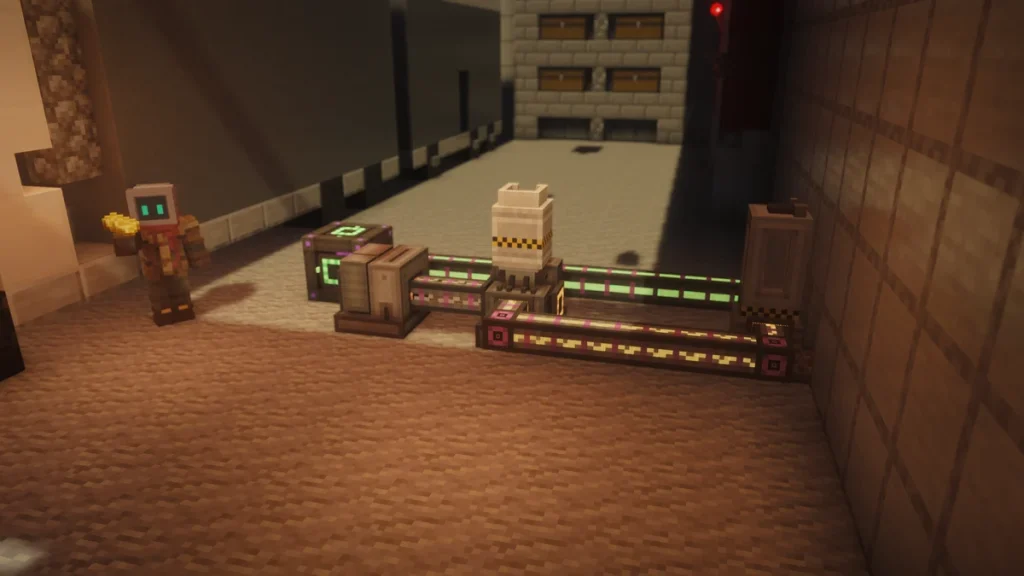
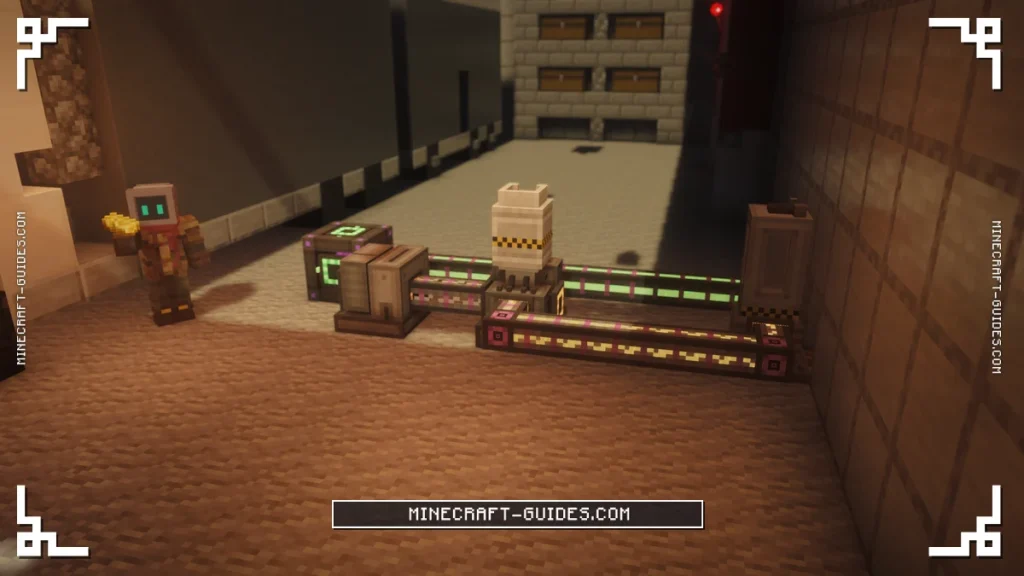
The chain has two branches that meet in the middle. It’s easiest to place the machines in the order below and connect them with Pressurized Tubes, as everything after the first step is a chemical. The chemical machines push their output out of one side by default, whereas items never leave a machine by themselves, so the  Enrichment Chamber needs auto-eject switched on.
| Step | Machine | Goes In | Comes Out |
|---|---|---|---|
| 1 | Enrichment Chamber | 1 Uranium Ingot | 2 Yellow Cake Uranium |
| 2 | Chemical Oxidizer | 1 Yellow Cake Uranium | 250 mB Uranium Oxide |
| 3 | Chemical Dissolution Chamber | 1 Fluorite + about 100 mB Sulfuric Acid | 1,000 mB Hydrofluoric Acid |
| 4 | Chemical Infuser | 1 mB Hydrofluoric Acid + 1 mB Uranium Oxide | 2 mB Uranium Hexafluoride |
| 5 | Isotopic Centrifuge | 1 mB Uranium Hexafluoride | 1 mB Fissile Fuel |
Fissile Fuel only exists as a chemical, so you’ll never hold it as an item or carry it in a  Bucket. It moves through tubes and sits in tanks, and the last machine in the line is usually piped straight into a Chemical Tank next to the reactor.
The Uranium branch
Put Uranium Ingots into an Enrichment Chamber and each one will come out as 2  Yellow Cake Uranium. It has to be the ingot, as
 Raw Uranium and
 Uranium Dust won’t work here. The Yellow Cake Uranium then goes into a
 Chemical Oxidizer, which will turn each piece into 250 mB of Uranium Oxide.


 2
So one ingot gives 500 mB of Uranium Oxide, and that’s already half of the 1,000 mB of fuel it’s going to become. If you’re short on Uranium, running the ore through ore processing first will give you more ingots for each block that’s mined, as Uranium has the full chain up to 5x.
The Fluorite branch
Fluorite goes into a  Chemical Dissolution Chamber along with Sulfuric Acid, and each gem will make 1,000 mB of Hydrofluoric Acid. A
 Block of Fluorite works as well, giving 9,000 mB at once.
 Fluorite Ore is worth putting through an Enrichment Chamber first, as that gives 6 Fluorite for each block.
The acid is used up for every tick that the machine is working, which comes to about 100 mB for each Fluorite at normal speed, so a bucket of it will cover around 10 of them.  Speed Upgrades will raise the amount that’s used for each gem and
 Chemical Upgrades will lower it, which is explained on the upgrades page.
You’ll need a steady supply of the acid for this, and it takes a couple of machines to make, which are all explained on the chemicals and fluids page. It’s the same acid that’s used for 5x ore processing as well, so one line of it is able to feed both of them.
Joining them and the centrifuge
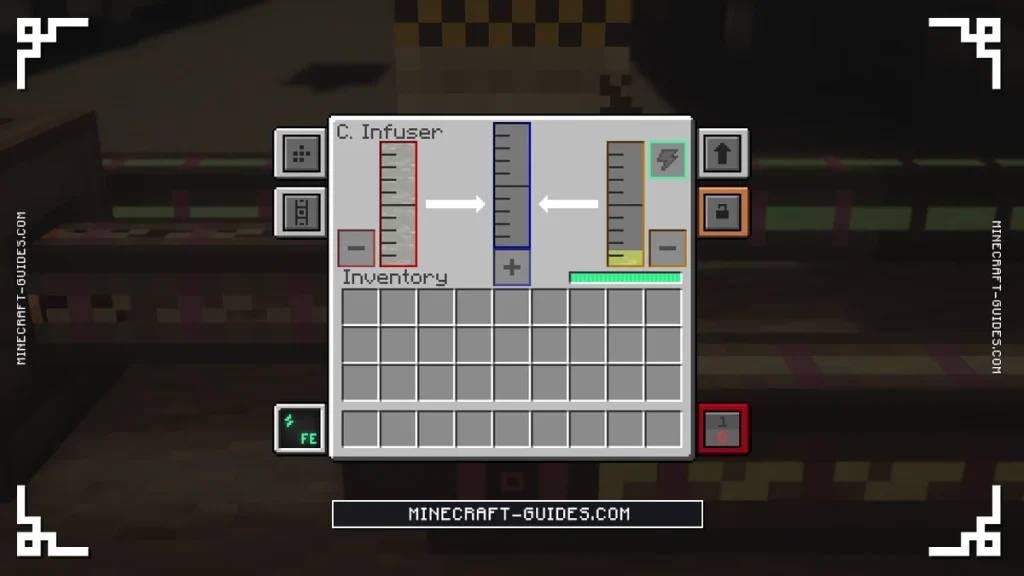
A  Chemical Infuser takes Hydrofluoric Acid in one side and Uranium Oxide in the other, and it’ll mix 1 mB of each into 2 mB of Uranium Hexafluoride. The two are used in equal amounts, which is where the ratio of 1 Fluorite to 2 Uranium Ingots comes from, as one gem makes 1,000 mB of acid and an ingot only needs 500 mB.
Lastly, the Isotopic Centrifuge will turn each mB of Uranium Hexafluoride into 1 mB of Fissile Fuel. It uses 80 FE/t (200 J/t) and handles 1 mB every tick, so one centrifuge with no upgrades keeps up with a burn rate of exactly 1 mB/t. Each Speed Upgrade doubles that but raises the power used for every mB, so a second centrifuge is cheaper to run.
How to Use It
Fissile Fuel goes into a  Fission Reactor Port that’s set to input, and the reactor will hold 8,000 mB of it for every
 Fission Fuel Assembly inside. The port won’t pull the fuel in by itself, so the tube or tank feeding it needs to push.
Every mB that’s burned gives 400,000 FE (1,000,000 J) of heat, so the 1,000 mB from one Uranium Ingot is 400 million FE of heat in total. At a burn rate of 1 mB/t that ingot will last 50 seconds. A small reactor running at the default 0.1 mB/t will take over 8 minutes to get through it instead.
| From | You Get |
|---|---|
| 1 Uranium Ingot | 1,000 mB Fissile Fuel |
| 1 Fluorite | Enough Hydrofluoric Acid for 2 Uranium Ingots |
| 1,000 mB Fissile Fuel | 400,000,000 FE of heat and 1,000 mB Nuclear Waste |
| 1,000 mB burned at 1 mB/t | 50 seconds, boiling 20,000,000 mB of Water into Steam |
Because it isn’t radioactive, Fissile Fuel can be stored in any Chemical Tank, and breaking a tube full of it does no harm. That’s not true for what the reactor makes from it. The Nuclear Waste that comes out is radioactive, and it’ll only go into  Radioactive Waste Barrels and a few machines.
Getting Fuel Back from Nuclear Waste
Most of the fuel you burn can be made again from the waste. Nuclear Waste is spun into Plutonium in a second Isotopic Centrifuge, at 10 mB of waste for each mB of Plutonium. Then 1,000 mB of Plutonium, 1,000 mB of Water and a  Fluorite Dust are turned into a
 Plutonium Pellet in a
 Pressurized Reaction Chamber.
The pellet goes into a  Chemical Injection Chamber with Hydrogen Chloride, which will give you 4
 Reprocessed Fissile Fragments. Each fragment is then put through a Chemical Oxidizer for 2,000 mB of Fissile Fuel. Fluorite Dust is just Fluorite that’s been through a
 Crusher.
Reprocessing Loop


The Pressurized Reaction Chamber also leaves 1,000 mB of Spent Nuclear Waste.
4


The viewer above only shows the item that goes into each machine, so remember that the injection step needs Hydrogen Chloride as well, at about 200 mB for each pellet. When it’s all added up, 10,000 mB of burned fuel will become one pellet and then 8,000 mB of new fuel, so you’ll get 80% of it back.
The pellet step also leaves 1,000 mB of Spent Nuclear Waste behind, which has no use and has to be stored, and that’s covered on the Nuclear Waste page. Both ends of this loop run through the same machine, so the Isotopic Centrifuge is the next one to read up on.
FAQ
It takes five machines in a row. Uranium Ingots become Yellow Cake Uranium in an Enrichment Chamber and then Uranium Oxide in a Chemical Oxidizer, while Fluorite and Sulfuric Acid become Hydrofluoric Acid in a Chemical Dissolution Chamber. A Chemical Infuser joins the two into Uranium Hexafluoride, and an Isotopic Centrifuge turns that into Fissile Fuel.
One Uranium Ingot makes 2 Yellow Cake Uranium, which is 500 mB of Uranium Oxide, and that becomes 1,000 mB of Fissile Fuel once it’s mixed with the same amount of Hydrofluoric Acid. A single Fluorite makes enough acid for 2 ingots, so you’ll use far more Uranium than Fluorite.
It isn’t radioactive, so you’re able to keep it in any Chemical Tank and pipe it around in the same way as Hydrogen or Oxygen. It’s only the waste that comes out of the reactor later on which a normal tank will refuse to take, and that has to go into Radioactive Waste Barrels instead.
The acid is taken for every tick that the machine is working, and not just once for each Fluorite, so a gem will cost you about 100 mB at normal speed. Speed Upgrades make it finish sooner but they use more acid for each gem, whereas Chemical Upgrades cut the amount down, so putting both in together will keep the speed without the extra cost.