
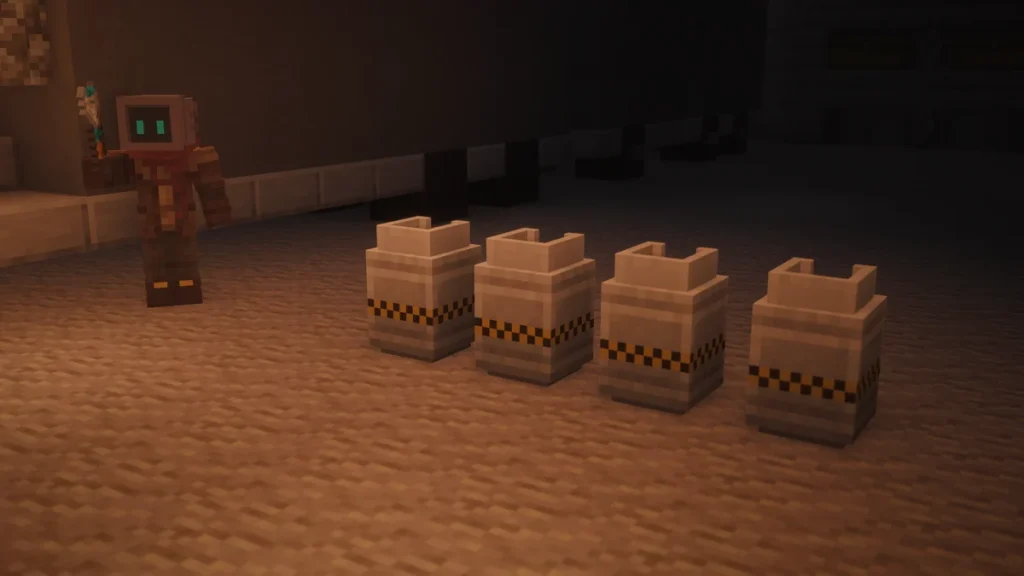
The Chemical Tank is a Mekanism block that stores one chemical, like Hydrogen, Oxygen or Ethene, and it’s crafted from four  Redstone Dust and four
 Osmium Ingots. A Basic tank holds 64,000 mB, and the four tiers go all the way up to 8,192,000 mB in the Ultimate one.
It’s also where you’ll fill your gear, as a  Jetpack,
 Scuba Tank or
 Flamethrower is filled by placing it in a slot inside the tank’s screen. The one thing a Chemical Tank won’t hold is anything radioactive, as Nuclear Waste and the chemicals made from it need a
 Radioactive Waste Barrel instead.
How to Make It
A  Basic Chemical Tank takes four Redstone Dust and four Osmium Ingots with nothing in the middle. The higher tiers are made from four of that tier’s alloy, four more Osmium Ingots and the tank below, and whatever chemical is inside will be kept by the new tank.


You’re able to upgrade a placed tank with a Tier Installer as well, which is covered on the Factories and Tier Installers page. There’s a  Creative Chemical Tank too, but it has no recipe, as it’s an endless supply that’s meant for creative mode.
How It Works
Getting Chemicals In and Out
A tank holds one chemical at a time and keeps it when the block is broken, so it’s able to be carried around like a canister. Chemicals get in and out through Pressurized Tubes, and a tank takes them in on every face apart from its front, which is set up as the output.
Unlike a machine’s item slots, a Chemical Tank will push its chemical out of that front face by itself, as auto-eject is already on for chemicals when it’s placed. You’ll want to point the front at whatever it’s feeding, and the tier decides how much is able to leave every tick. To use one as plain storage, turn auto-eject off in the Side Configuration tab.
Gases on Older Versions
On older versions like 1.20.1 the mod split chemicals into gases, infuse types, pigments and slurries, and older guides will talk about storing a gas rather than a chemical. They’re all just chemicals now, so one Chemical Tank is able to hold any of them.
Tiers
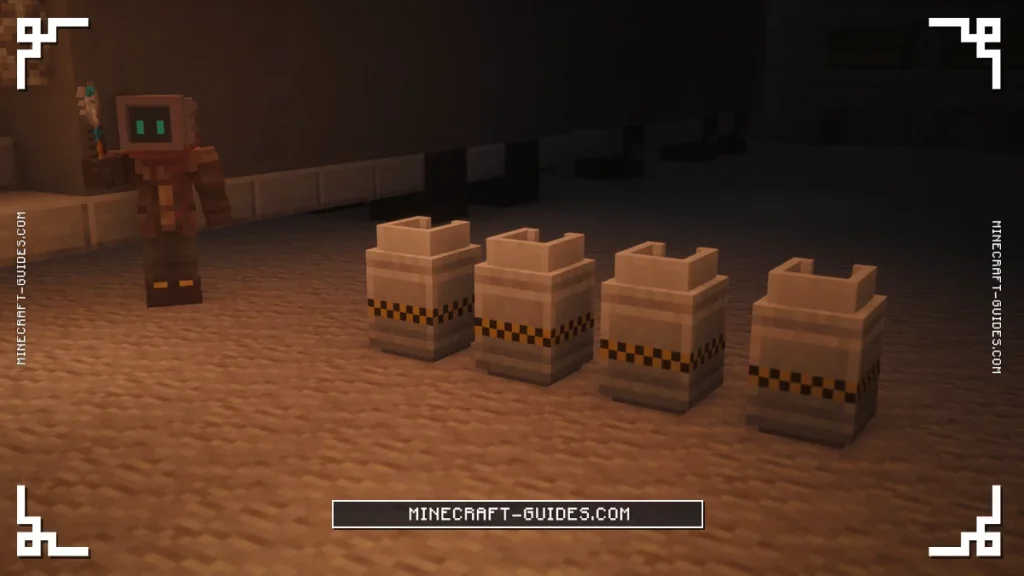
Each tier holds four times as much as the one before it, apart from the last step, where the  Ultimate Chemical Tank holds eight times as much as the Elite. The output rate climbs even faster, which matters when a tank is feeding something hungry like a turbine.
| Tier | Capacity | Output Rate |
|---|---|---|
| Basic | 64,000 mB | 1,000 mB/t |
| Advanced | 256,000 mB | 16,000 mB/t |
| Elite | 1,024,000 mB | 128,000 mB/t |
| Ultimate | 8,192,000 mB | 512,000 mB/t |
| Creative | Infinite | Infinite |
For anything bigger than that you’ll want a  Dynamic Tank, as even the smallest one holds 432,000,000 mB of a chemical. A row of Chemical Tanks is still handy as a buffer between machines though, like between an
 Electrolytic Separator and whatever is burning its Hydrogen.
Idle, Dumping Excess and Dumping
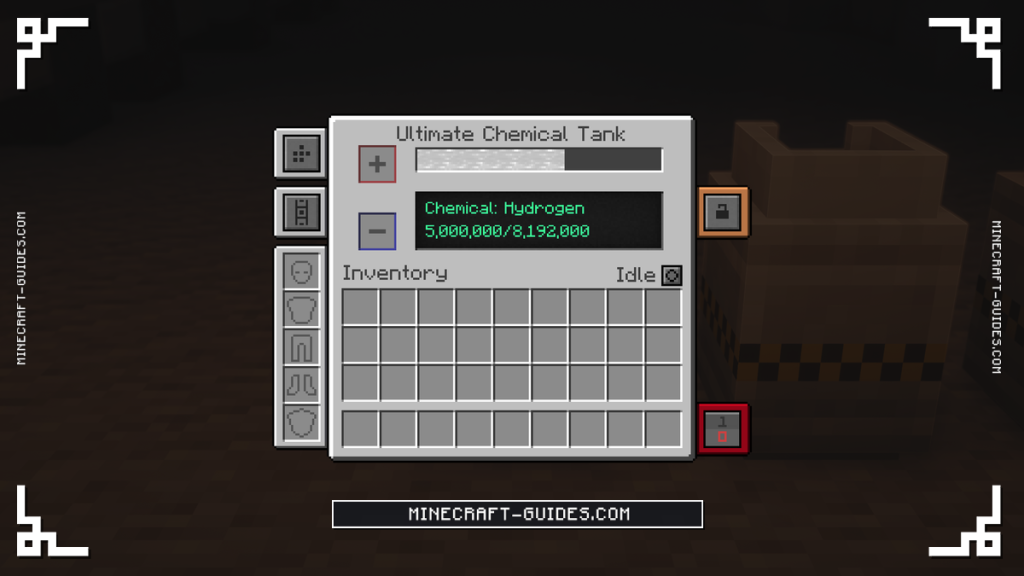
There’s a button in the tank’s screen that cycles between three modes, and it starts on Idle, where the tank just stores what it’s given. The other two are used to get rid of a chemical, which is useful when a machine makes a byproduct that you don’t need.
| Mode | What happens to the chemical | Keeps ejecting |
|---|---|---|
| Idle | Stored until the tank is full | Yes |
| Dumping Excess | Kept at 85%, anything above it destroyed | Yes |
| Dumping | All destroyed, about 20 seconds for a full tank | No |
A good example is the Electrolytic Separator, which makes Oxygen alongside the Hydrogen you might be after. Sending the Oxygen into a tank that’s set to Dumping Excess will keep the Separator running, and you’ll still have a nearly full tank of it if you need some later.
Filling a Jetpack or Scuba Tank
The tank’s screen has two item slots, one marked with a plus and one with a minus. An item in the plus slot is filled from the tank, so that’s where a Jetpack goes to take Hydrogen, a Scuba Tank to take Oxygen, or a Flamethrower to take Hydrogen as well.
The minus slot works the other way round, as it empties whatever the item is holding back into the tank. Right-clicking a tank with the item in your hand won’t fill it, which is a common mistake, so remember to open the screen and use the slot.
What a Chemical Tank Cannot Hold
Radioactive chemicals are refused by every Chemical Tank apart from the Creative one. That covers Nuclear Waste and Spent Nuclear Waste, as well as the Plutonium and Polonium that are made from them, so a tube carrying any of those won’t empty into a normal tank.
They have to go into a Radioactive Waste Barrel instead, or straight into the machine that uses them, and the Nuclear Waste page goes through the options. Fissile Fuel isn’t radioactive, so it’s fine to keep a Chemical Tank of it beside a Fission Reactor as a buffer.
Upgrades and Automation
Chemical Tanks don’t use any energy and don’t take upgrades, so the tier is the only thing that changes how they perform. The screen has the same redstone control as a machine, which is able to stop the tank from ejecting while a signal is on or off.
When a single tank isn’t enough, the next step up is a multiblock that’s built from Steel. The Dynamic Tank holds a fluid or a chemical, and it’s sized by how big you build it rather than by a tier.
FAQ
Open the tank and click the mode button until it says Dumping, which destroys the chemical and empties a full tank in about 20 seconds. Remember to set it back to Idle afterwards, as the tank won’t eject anything while it’s dumping. A  Gauge Dropper will do it instantly instead, with a Shift + left-click on the gauge.
Put the Jetpack in the slot marked with a plus inside a Chemical Tank that holds Hydrogen, and it’ll be filled from the tank. The output slots of an Electrolytic Separator do the same job, whereas right-clicking the tank with the Jetpack doesn’t do anything.
Dumping Excess keeps a tank at 85% full by destroying whatever comes in above that level, and it carries on ejecting as normal. It’s used on byproducts like Oxygen, so that a full tank never stops the machine that’s making them.
Nuclear Waste is radioactive, and a Chemical Tank refuses every radioactive chemical, including Spent Nuclear Waste, Plutonium and Polonium. You’ll need to pipe those into a Radioactive Waste Barrel with Pressurized Tubes, or directly into the machine that processes them.


