
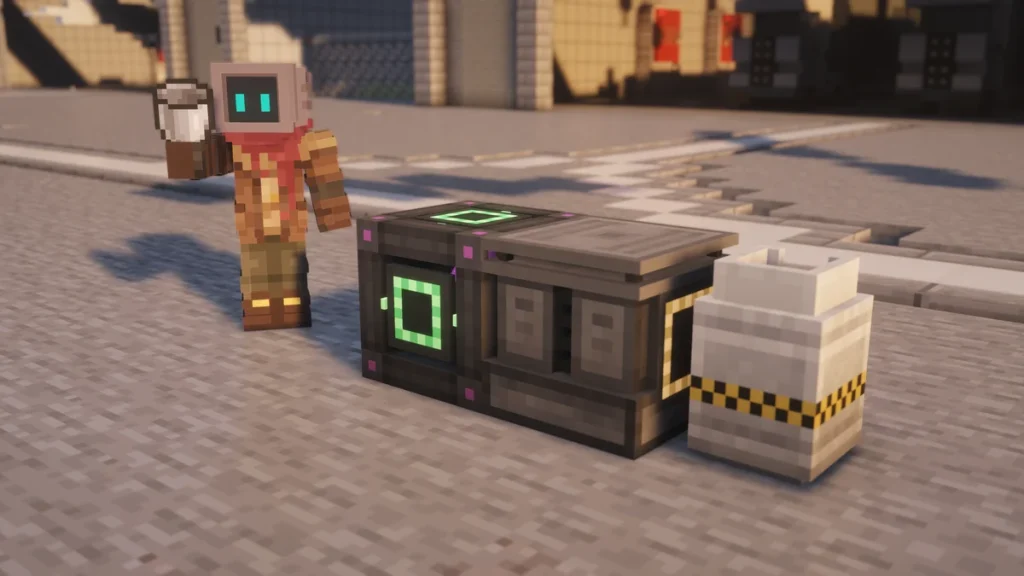
The  Rotary Condensentrator is a Mekanism machine that turns a chemical into its fluid form, or a fluid back into a chemical. It’s always 1 mB for 1 mB, and you’ll need it whenever a machine asks for the other form of something you already have, like Liquid Ethene for HDPE or Water Vapor for Sulfuric Acid.
It has two modes on one button, which are called Condensentrating and Decondensentrating. The first takes a chemical and gives you the fluid, and the second takes a fluid and gives you the chemical, so if nothing is happening it’s usually set the wrong way round.
How to Make It
The recipe has a  Basic Chemical Tank, an
 Energy Tablet and a
 Basic Fluid Tank across the middle row. Above and below them is a
 Basic Control Circuit with
 Glass on either side, which makes 4 Glass and 2 circuits in total.


Nothing in there is hard to get, as the two tanks are both the Basic tier and the Energy Tablet is an early craft. You’ll usually be making your first one for the Ethene line or for Sulfuric Acid, which is around the time you’re moving past doubling ores.
How It Works
There’s a chemical tank on the left of the screen and a fluid tank on the right, and each of them holds 10 buckets. In the middle is the Toggle operation button, which flips between the two modes, and the arrow will change direction to show which way it’s running.
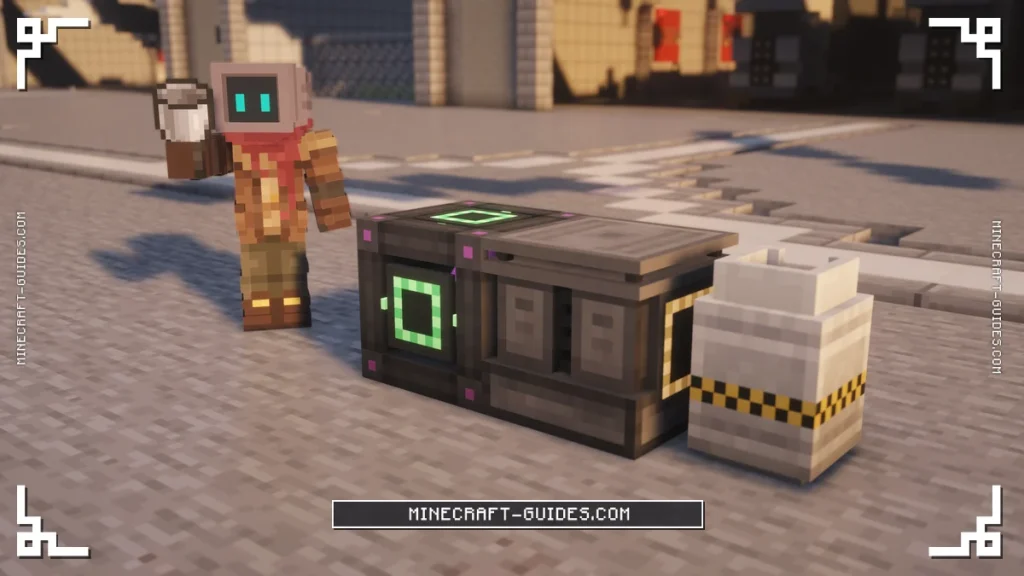
When you first place it, the machine will be in Condensentrating mode, which takes a chemical in and puts the fluid out. Press the button once and it changes to Decondensentrating, where a fluid goes in and the chemical comes out, which is the one you’ll want for Water Vapor and for Lithium.
The tank that’s being filled by the machine won’t accept anything from a pipe, so Water won’t go in while it’s on the first mode. It does one operation a tick for 20 FE (50 J), which is 1 mB, and it holds 8,000 FE. What it makes is pushed out by itself, with fluid leaving from the right side and chemicals from the left as you face the front.
Water in a Rotary Condensentrator makes Water Vapor, which is the chemical the  Chemical Infuser needs for Sulfuric Acid. Steam is a different chemical that comes from a Thermoelectric Boiler or a reactor, and neither one can be swapped for the other.
You’re also able to use the slots beside each tank, which fill or empty a tank item or a  Bucket by hand. That’s the easy way to get a bucket of something like Liquid Hydrogen, as the fluid forms can be picked up in a Bucket once the machine has made 1,000 mB of them.
Every Pair
Most chemicals have a fluid twin with Liquid in front of the name, and those all convert both ways. A few of them have their own names, and those are the ones that catch people out, so they’re at the top of the table.
| Chemical | Fluid | Why You Would |
|---|---|---|
| Water Vapor | Water | Water Vapor for Sulfuric Acid |
| Gaseous Brine | Brine | Brine from Salt, without an evaporation plant |
| Lithium | Liquid Lithium | Lithium for Tritium or Lithium Dust |
| Ethene | Liquid Ethene | Liquid Ethene for HDPE Pellets |
| Steam | Liquid Steam | Storage only |
| Hydrogen, Oxygen, Chlorine | Liquid Hydrogen, Liquid Oxygen, Liquid Chlorine | Storage in a fluid tank |
| Sulfur Dioxide, Sulfur Trioxide, Sulfuric Acid | The Liquid form of each | Storage in a fluid tank |
| Hydrogen Chloride, Hydrofluoric Acid | The Liquid form of each | Storage in a fluid tank |
| Uranium Oxide, Uranium Hexafluoride | The Liquid form of each | Storage in a fluid tank |
| Sodium, Superheated Sodium | Liquid Sodium, Liquid Superheated Sodium | Storage in a fluid tank |
| Deuterium, Tritium, D-T Fuel | Liquid Deuterium, Liquid Tritium, Liquid D-T Fuel | Storage in a fluid tank |
There’s no pair for Heavy Water or Nutritional Paste, as they’re only ever fluids and can’t be turned into a chemical. It’s the same the other way for Fissile Fuel, Nuclear Waste, the pigments, the slurries and the infusing chemicals like Carbon and Redstone, which have no fluid form, so those stay in Chemical Tanks and Pressurized Tubes.
The four jobs that need it
Sulfuric Acid needs Water Vapor, so you’ll switch one over to the second mode and pipe Water in from an  Electric Pump, then send the vapor on to a Chemical Infuser. Lithium is the same idea, as the Thermal Evaporation Plant gives Liquid Lithium and everything that uses Lithium wants the chemical.
HDPE goes the other way. The  Pressurized Reaction Chamber makes Ethene as a chemical, but its
 HDPE Pellet recipe takes 50 mB of Liquid Ethene in the fluid tank, so a machine left on its starting mode sits between the two. The last one is Brine from
 Salt, where a
 Chemical Oxidizer gives Gaseous Brine and this turns it into the fluid.
Upgrades and Automation
You’re able to put Speed, Energy and  Muffling Upgrades in it, and each
 Speed Upgrade will double the operations it does in a tick. So with 8 of them it converts 256 mB a tick, but the energy for each mB goes up by a little under double with every one, so one or two is usually enough.
A fluid is fed in with Mechanical Pipes and a chemical with Pressurized Tubes, and the output will push into a pipe or tank on its own side without any setting up. With one mode per machine, a line that needs both directions needs two of them, and the Chemicals and Fluids page lists what every chemical is made from.
FAQ
Pick the mode with the Toggle operation button in the middle of its screen, then pipe in whatever that mode takes. Condensentrating wants a chemical and gives a fluid, and Decondensentrating wants a fluid and gives a chemical, at 1 mB for 1 mB and 20 FE each.
It’ll only take a fluid while it’s set to Decondensentrating, and it starts on Condensentrating when you place it. Press the button in the middle of the screen to switch, and the Water will go in and come out as Water Vapor.
Send the Ethene from a Pressurized Reaction Chamber into a Rotary Condensentrator set to Condensentrating, which gives Liquid Ethene at 1 mB for 1 mB. It was called Liquid Ethylene in older versions of the mod, but the machine and the amounts are the same.
They’re two different chemicals, and one can’t be used in place of the other. Water Vapor is made from Water in a Rotary Condensentrator and goes into Sulfuric Acid, whereas Steam comes from a Thermoelectric Boiler or a reactor and is used to spin an Industrial Turbine.


