
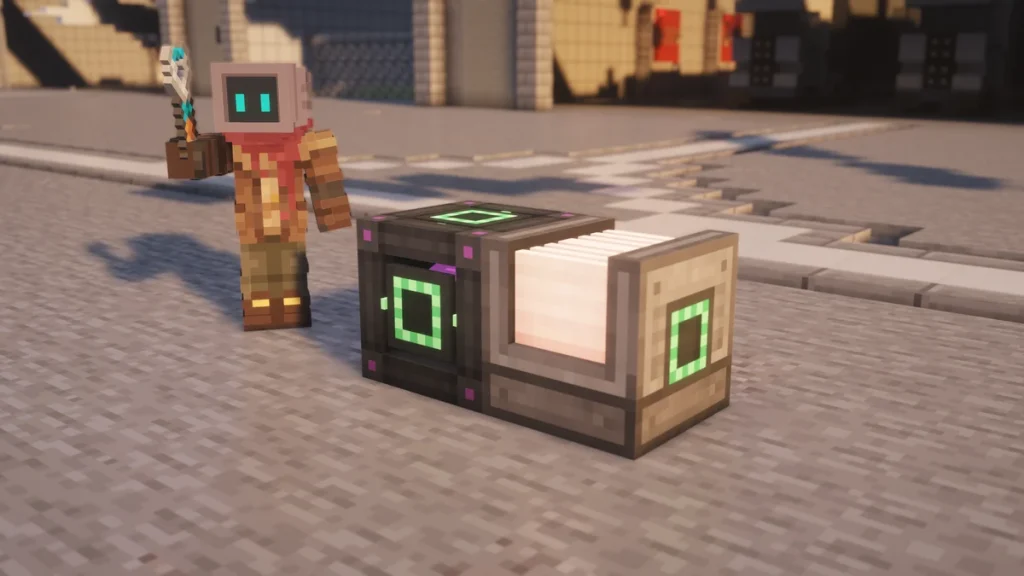
The  Resistive Heater is a Mekanism machine that turns FE into heat, which it then passes into any heat-accepting block that it’s touching. You’ll set how much power it draws in its own screen, and 60% of that comes out as heat. It’s mostly used to push a Thermal Evaporation Plant past what solars are able to manage, or to keep one running at night.
There’s also the  Fuelwood Heater, which does the same job by burning
 Furnace fuel and needs no power at all. Heat only moves between blocks that touch, so for anything further away you’ll want Thermodynamic Conductors, which are covered at the bottom of this page.
How to Make It
A Resistive Heater is crafted from 4  Tin Ingots, 3
 Redstone Dust, a
 Steel Casing and an
 Energy Tablet. The Fuelwood Heater is the cheaper one to get early on, as it takes 5
 Steel Ingots, 2 Furnaces, a Steel Casing and a
 Basic Control Circuit.


Both of them are single blocks, and they’ll give off heat from every face. Where you place one matters more than which way it’s facing, as the block it’s heating has to be right against it. For a plant, that block has to be a  Thermal Evaporation Valve, whereas a Thermoelectric Boiler should take heat through its casing.
How It Works
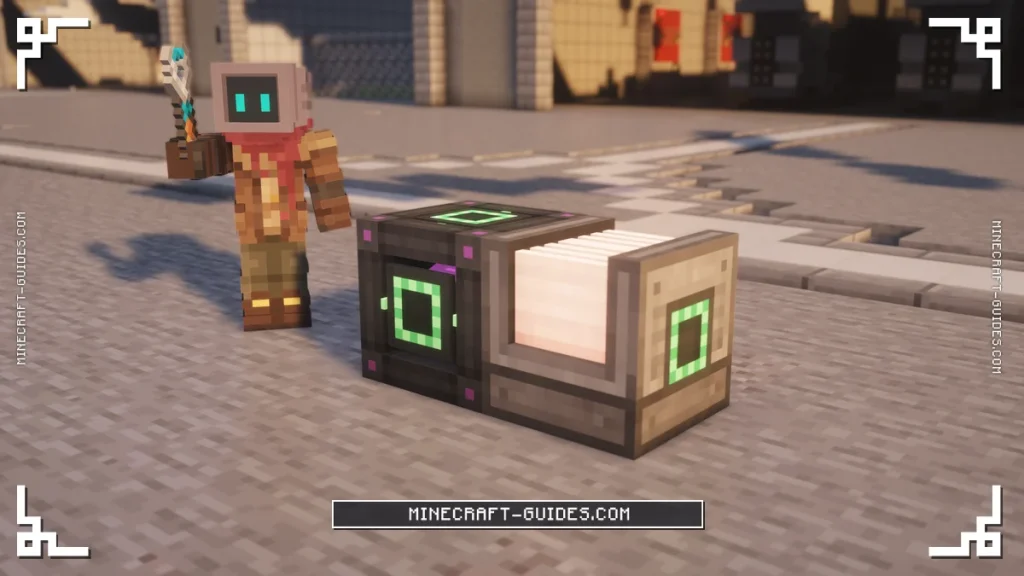
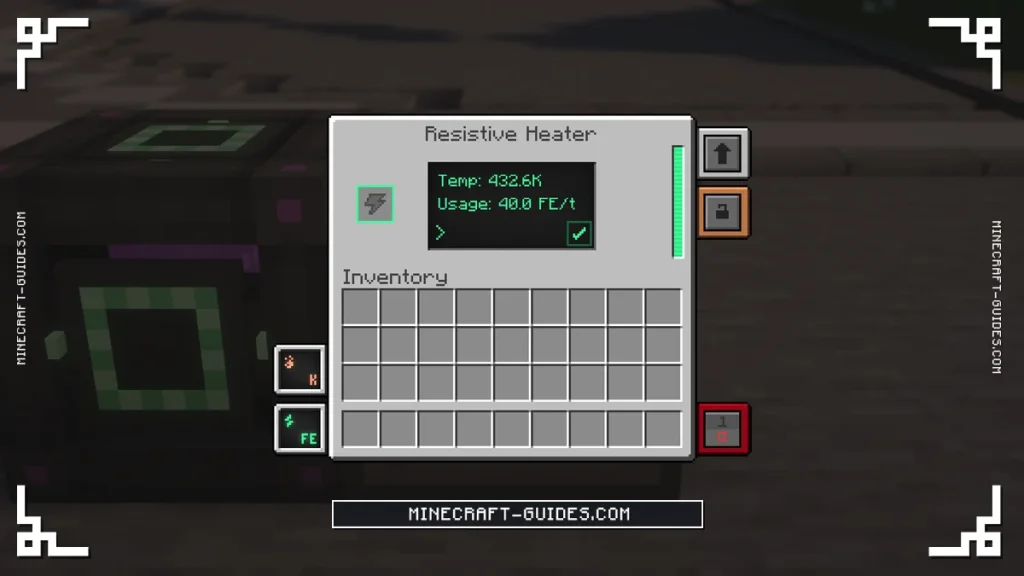
Power goes into the Resistive Heater through its left and right sides, so that’s where the Universal Cable needs to connect. When you open it, there’s a box to type the energy usage into, and it’ll draw exactly that much every tick for as long as it’s supplied. A new heater starts out at 40 FE/t (100 J/t).
Make sure the heater is touching something that takes heat before you power it. Left by itself, it’ll just warm itself up, and all of that heat is lost to the air around it.
For every 1 FE that it uses, the heater makes 1.5 heat, as the other 40% is lost. There isn’t an upper limit that you’ll run into, so one heater is able to do the work of several by just turning the number up. The setting is kept when the block is broken and picked up, which saves typing it in again.
What Takes Heat
Not many blocks are able to take heat. In Mekanism it’s the Thermal Evaporation Valve, the Thermoelectric Boiler, the ports of the Fission Reactor and Fusion Reactor, and the  Heat Generator, along with other heaters and conductors. A machine like the
 Energized Smelter won’t do anything with it.
Heating a Thermal Evaporation Plant
A plant loses heat faster the hotter it gets, and a taller one loses more as well, so the draw you’ll need depends on both. The table shows roughly what to type into the Resistive Heater to hold a plant at each temperature, with no solars on it and in a 300 K biome like Plains.
| Temperature | Height 3 | Height 9 | Height 18 |
|---|---|---|---|
| 700 K | 80 FE/t | 241 FE/t | 482 FE/t |
| 1,900 K | 161 FE/t | 482 FE/t | 964 FE/t |
| 3,000 K (cap) | 209 FE/t | 626 FE/t | 1,252 FE/t |
The plant stops gaining speed at 3,000 K, so there’s no reason to go past the bottom row. If it already has 4  Advanced Solar Generators on it, then a full-height plant only needs about 290 FE/t from the heater to reach that cap during the day. It’ll drop back at night though, unless the heater is set high enough to carry it alone.
Heating a Thermoelectric Boiler
You’re able to run a Thermoelectric Boiler from Resistive Heaters as well, by placing them against its casing. It works, but it isn’t a way to make power. Each 1 mB of Steam costs about 33 FE through a heater, and an Industrial Turbine will give back 4 FE for it at the very most.
That makes it a loss of nearly 90%, so it’s only really worth doing to test a turbine before the reactor is ready. For real Steam you’ll want the Superheated Sodium loop from a Fission Reactor instead, which heats the boiler without using any FE.
Fuelwood Heater
The Fuelwood Heater burns anything that a Furnace would, and makes a flat 400 heat a tick while it’s lit. That’s the same as a Resistive Heater drawing about 267 FE/t, with no cable needed. Fuel only lasts for half as long as it would in a Furnace though, so a piece of  Coal is gone in 40 seconds.
Heating a Plant with Fuel
It’s enough to matter. A single Fuelwood Heater against a Valve will take the smallest Thermal Evaporation Plant all the way to the 3,000 K cap, whereas a full-height one would need five of them. It doesn’t take power or upgrades, so you’ll just keep it fed with fuel, and a  Hopper or a Logistical Transporter is able to do that for you.
Thermodynamic Conductors
When the heater can’t sit right against what it’s heating, Thermodynamic Conductors are used to carry the heat across, as they’re the heat version of a cable. You’ll get 8  Basic Thermodynamic Conductors from 2 Steel Ingots either side of a
 Copper Ingot, and each higher tier is made from 8 of the tier below around an alloy.

 8

 8

 8

 8
All four tiers move heat at the same speed, so a better one won’t heat anything faster. What changes is the insulation, which is how little heat each block leaks into the air on the way. That only starts to matter on longer runs, as a few Basic ones between a heater and a Valve lose very little.
| Tier | Insulation | Upgraded with |
|---|---|---|
| Basic | 10 | Crafted from Steel Ingots and a Copper Ingot |
| Advanced | 400 | Infused Alloy |
| Elite | 8,000 | Reinforced Alloy |
| Ultimate | 100,000 | Atomic Alloy |
The alloys for the higher tiers are the same ones used to upgrade cables and pipes, so you’ll likely have them around by the time a long heat run comes up. Right-clicking a placed conductor with the next alloy up will upgrade it where it sits as well, along with a few of the conductors connected to it.
Upgrades and Automation
The only upgrade that fits a Resistive Heater is the  Muffling Upgrade, which quiets it down. Speed and
 Energy Upgrades have nothing to do here, as you’re already choosing the draw yourself. It doesn’t give a Comparator signal either, so there’s no way to read its temperature with redstone.
To control it, the simplest thing is to control the power going in, like by putting it on a cable of its own from an Energy Cube. Its internal buffer always holds 20 seconds’ worth of whatever draw you’ve set, so it’ll carry on heating for that long after the power is cut. From here, the Thermoelectric Boiler is the other big thing that runs on heat.
FAQ
Place it against the block you want to heat, like a Thermal Evaporation Valve, and run power into its left or right side. Then open it and type in how much energy it should use each tick, as it starts at just 40 FE/t. It’ll turn 60% of that into heat for as long as it has power.
It depends on the height, as a full-height plant needs about 1,250 FE/t to hold the 3,000 K cap by itself, whereas the smallest one only needs about 210 FE/t. If the plant has 4 Advanced Solar Generators as well, then around 290 FE/t is enough at full height during the day.
The plant only takes heat in through a Thermal Evaporation Valve, so a heater that’s against a plain  Thermal Evaporation Block or the Controller does nothing. Move it so that it touches a Valve, or join the two with Thermodynamic Conductors, and check that the cable is on its left or right side as well.
They suit different stages, as the Fuelwood Heater makes 400 heat a tick from Furnace fuel and needs no power, which is the same as a Resistive Heater at about 267 FE/t. The Resistive Heater can be turned up as high as you like though, so it’s the one to use once you’ve got spare power.


