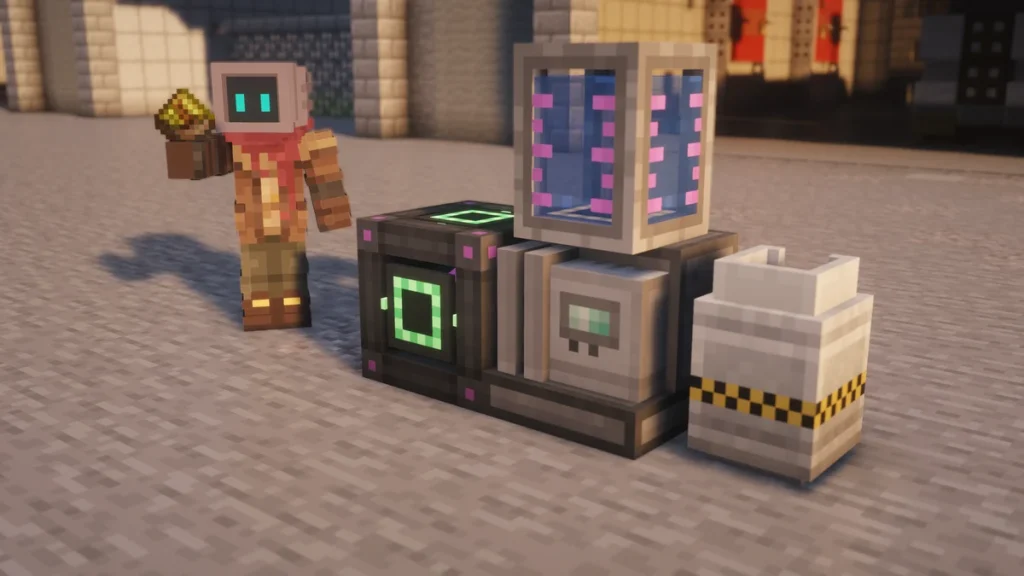
The  Pressurized Reaction Chamber is a Mekanism machine that takes an item, a fluid and a chemical all at once, and reacts them into a new item and a new chemical. It’s where Ethene (called Ethylene in older versions) is made from
 Bio Fuel, which is the fuel most players move on to after their first few generators.
You’ll also need it to make  HDPE Pellets for plastic, and it’s able to turn
 Coal into
 Sulfur Dust, which is used for Sulfuric Acid later on. The machine itself only uses 2 FE/t (5 J/t), with each recipe adding a cost of its own on top of that.
How to Make It
Two of the parts in its recipe are other machines, which is why it takes a while to put together. You’ll need an  Enrichment Chamber in the middle and a
 Dynamic Tank below it, with a
 Basic Chemical Tank and a
 Basic Control Circuit on each side of them. The top row is 2
 Steel Ingots with an
 Infused Alloy between them.


The Enrichment Chamber is used up when you craft it, so you’ll want to make a spare one for this instead of taking one out of an ore line. It only needs a single Dynamic Tank block as well, which is the casing block that the tank is built from and not a whole tank.
How It Works
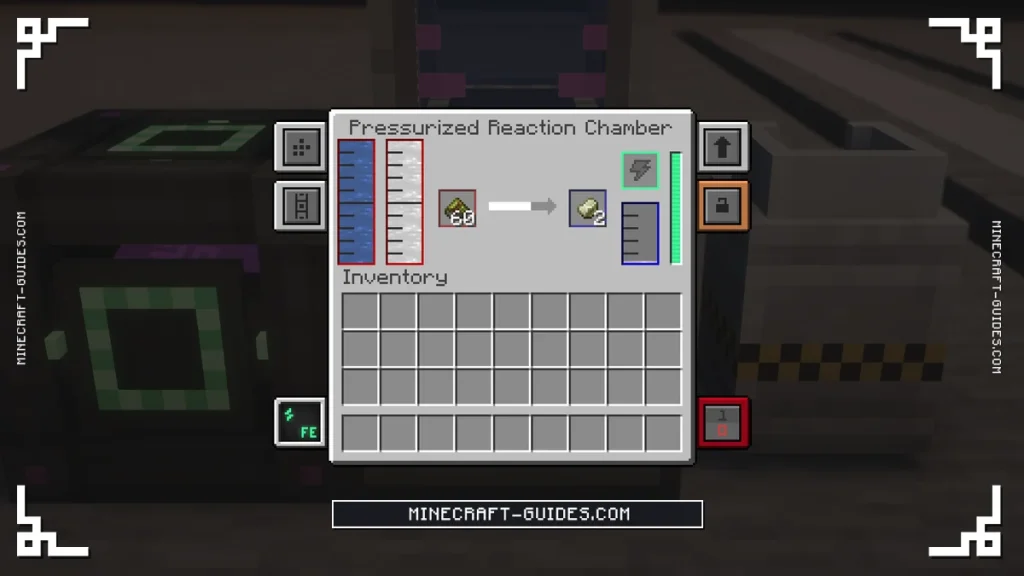
There are three inputs on the chamber, which are a slot for the item, a tank for the fluid and another tank for the chemical, and both of those tanks hold 10,000 mB. A recipe will only start once all three of its ingredients are in there, so when it’s sitting idle, it’s usually because one of the tanks is short.
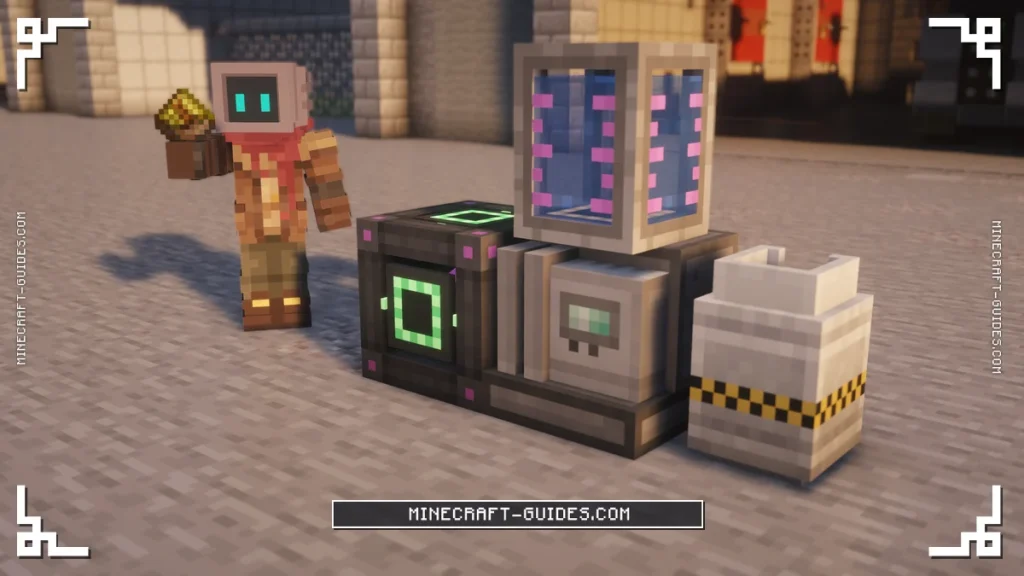
For the outputs, it has a slot for the item that’s made and a second chemical tank, which also holds 10,000 mB. The chemical is pushed out of the machine’s right side by default, so a Pressurized Tube there is all it needs, or a chamber that’s making Ethene will fill its tank and stop. The item stays in its slot until you turn auto-eject on for items.
It’s different to the other machines in that the time it takes and the power it uses are both set by the recipe. Most of them only need the 2 FE/t that the chamber uses anyway, but making more  Substrate takes 82 FE/t and HDPE Pellets take 402 FE/t, which starts to matter once you’re adding upgrades to it.
Recipes
All of the recipes that the chamber is able to do are in this table. The fluid is nearly always Water, which can be piped in from an  Electric Pump, and most of the chemicals that it needs will come from an
 Electrolytic Separator.
| Item | Fluid | Chemical | Makes | Time |
|---|---|---|---|---|
| 2 Bio Fuel | 10 mB Water | 100 mB Hydrogen | 1 Substrate + 100 mB Ethene | 5 s |
| 1 Substrate | 200 mB Water | 100 mB Ethene | 8 Substrate + 10 mB Oxygen | 20 s |
| 1 Substrate | 50 mB Liquid Ethene | 10 mB Oxygen | 1 HDPE Pellet | 3 s |
| 1 Coal or Charcoal (or the dust) | 100 mB Water | 100 mB Oxygen | 1 Sulfur Dust + 100 mB Hydrogen | 5 s |
| 1 Block of Coal or Block of Charcoal | 1,000 mB Water | 1,000 mB Oxygen | 9 Sulfur Dust + 1,000 mB Hydrogen | 45 s |
| 4 logs or 20 planks | 400 mB Water | 400 mB Oxygen | 1 Charcoal Dust + 400 mB Hydrogen | 30 s |
| 8 Sawdust | 25 mB Water | 25 mB Oxygen | 25 mB Hydrogen | 2 s |
| 3 Sticks or 1 wooden slab | 10 mB Water | 10 mB Oxygen | 10 mB Hydrogen | 1 s |
| 1 wooden stairs | 15 mB Water | 15 mB Oxygen | 15 mB Hydrogen | 1 s |
| 1 Fluorite Dust | 1,000 mB Water | 1,000 mB Plutonium | 1 Plutonium Pellet + 1,000 mB Spent Nuclear Waste | 5 s |
| 1 Fluorite Dust | 1,000 mB Water | 1,000 mB Polonium | 1 Polonium Pellet + 1,000 mB Spent Nuclear Waste | 5 s |
The times in the table are with no upgrades, and they’re short for most of these, so a single chamber is able to get through a lot. It’s the Substrate and HDPE recipes that are slow or expensive, as they’re the ones that carry an energy cost of their own.
Ethene and Substrate
The first recipe in the table is the one that most chambers are built to run. It takes two Bio Fuel, a little Water and 100 mB of Hydrogen, and gives 100 mB of Ethene with a Substrate left over. When it’s burned in a  Gas-Burning Generator, each mB of that Ethene is worth 11,280 FE, whereas the Hydrogen that went into it was only worth 80 FE.
 2


The viewer above can only show the item that goes in, so the Water and the chemical for each recipe are the ones listed in the table. A Substrate can be put back in with Water and Ethene to make 8 of them, which you’ll only need when you’re making plastic, and Ethene goes through sizing a plant around the fuel.
HDPE Pellets
To make HDPE, the Ethene has to go in as a fluid and not as a chemical, which is easy to miss. You’ll need to send it through a  Rotary Condensentrator first so that it becomes Liquid Ethene, and that can then be piped into the fluid tank, with Oxygen going into the chemical tank. Each Substrate you put in will come out as one HDPE Pellet.
Coal and Wood
When Coal is put in with Water and Oxygen, it will react into Hydrogen and a piece of Sulfur Dust. It uses as much Oxygen as the Hydrogen it makes, so this isn’t a good way of getting Hydrogen, it’s how you’ll get the Sulfur Dust for the Sulfuric Acid that 5x ore processing needs. The wood recipes work in the same way, but they give  Charcoal Dust or nothing.
Plutonium and Polonium Pellets
The last two recipes are for the end of the mod, where 1,000 mB of Plutonium or Polonium is reacted with a  Fluorite Dust to make a
 Plutonium Pellet or a
 Polonium Pellet. Each one leaves 1,000 mB of Spent Nuclear Waste in the output tank, which is radioactive and has to be piped into a
 Radioactive Waste Barrel. Nuclear Waste, Plutonium and Polonium covers what to do with it.
Upgrades and Automation
It takes up to 8  Speed Upgrades, 8
 Energy Upgrades and a
 Muffling Upgrade. The chamber is only able to store 800 FE though, which is a lot less than the other machines, and it won’t run unless it’s holding enough power to cover one whole tick of work.
On the HDPE Pellet recipe, one Speed Upgrade raises the cost to about 715 FE/t, which still fits in the 800 FE buffer. A second one takes it to around 1,270 FE/t, so the chamber shouldn’t be able to start, going by how the code checks its buffer. Each Energy Upgrade makes the buffer bigger and the cost smaller, so adding one for every Speed Upgrade keeps it working.
You won’t have this problem with the Ethene recipe, as it only uses 2 FE/t to begin with, so it’s able to take all 8 Speed Upgrades without any Energy Upgrades at all. That will bring it down to half a second for each pair of Bio Fuel, and it only uses 200 FE/t while it’s doing it.
There isn’t a factory version of the chamber, so if you need more Ethene, you’ll have to add more upgrades to it or build a second one. If it’s plastic that you’re making, the pellets are turned into sheets and rods next, which HDPE: Pellets, Sheets and Rods goes through.
FAQ
It needs an item, a fluid and a chemical for every recipe, so you’ll be piping two things in as well as adding the item. For Ethene that’s Bio Fuel in the slot, Water in the fluid tank and Hydrogen in the chemical tank, and the Ethene has to be piped out of the output tank.
It’s usually missing one of its three inputs, or the output tank is full, as the chemical is only pushed out through its right side unless you change that. If it stopped after adding Speed Upgrades, the recipe now costs more each tick than the 800 FE it’s able to hold, which Energy Upgrades will fix.
Most players use it to make Ethene for the Gas-Burning Generator, which is worth 141 times as much as Hydrogen for each mB. It’s also the only way to make HDPE Pellets for the MekaSuit, and it makes Sulfur Dust from Coal, as well as Plutonium and Polonium Pellets.
There isn’t a factory version of it, as only nine of the simpler machines can be upgraded that way. To make more with one chamber you’ll need Speed Upgrades, and for the more expensive recipes those have to be matched with Energy Upgrades.