Mekanism is a tech mod where you’ll build machines that run on power, and nearly all of them need Osmium, which is a new ore you’ll find underground. The first thing to craft is a  Metallurgic Infuser, as it’s the machine that makes Steel, and almost every other recipe in the mod has Steel in it somewhere.
From there you’ll go on to machines that double your ores, then to gases and plastic, and finally to reactors and a suit of powered armor. The mod doesn’t have a guide book, so this page goes through it in the order you’ll build things, and the Mekanism guide gives a shorter overview of the mod as well.
Is There a Mekanism Guide Book?
There isn’t one, as the mod doesn’t add a book item and there’s no recipe for one either. What it has instead is a description on every block and item, which you’ll see by holding Shift and N while your mouse is over it. Its advancements are worth following too, as they’re laid out in the order the mod expects you to build things.
A recipe viewer like JEI or EMI will show you every machine recipe as well, with the power and the chemicals each one needs. The list of every block and item on this wiki does the same job outside the game, and the Items tab has every item, recipe and tooltip.
Mekanism Progression at a Glance
Most players will go through the mod in about the same order, as each stage needs something that’s made in the one before it. You aren’t locked into it, though, so you’re able to jump ahead whenever you have what a recipe asks for.
| Stage | What you build | What it unlocks |
|---|---|---|
| 1. Osmium | Metallurgic Infuser, Heat Generator | Steel, Basic Control Circuits, Infused Alloy |
| 2. First machines | Steel Casing, Enrichment Chamber, Crusher, Energized Smelter | More ingots from your ores, dusts, upgrades |
| 3. Power | Wind Generators, Energy Cube, Universal Cables | Enough power for more than two machines |
| 4. Better tiers | Reinforced and Atomic Alloy, higher circuits | Factories, faster cables, bigger tanks |
| 5. Chemicals | Electrolytic Separator, Purification Chamber and the rest | Up to 5 ingots from each ore block |
| 6. Ethene and plastic | Pressurized Reaction Chamber, Gas-Burning Generator | Large amounts of power, HDPE |
| 7. Automation | Digital Miner, QIO, Teleporter | Ores without mining, storage you can reach anywhere |
| 8. Reactors | Fission Reactor, Industrial Turbine, then fusion | Millions of FE a tick, Polonium, Antimatter |
| 9. End game | MekaSuit, Meka-Tool, SPS | Armor and a tool that are built from modules |
The numbers you’ll see on this wiki are the mod’s defaults, and a modpack is able to change most of them, which the config page goes into. That page also lists what’s different on 1.20.1, like the recipe for  Infused Alloy.
Finding Osmium and Your First Ores
 Osmium Ore only spawns in the Overworld, and it’ll show up at almost any height, so you’ll usually find some while you’re mining for Iron. There’s a lot more of it inside mountains above Y 72, which makes a tall hillside a good place to look if you’re running short.
You’ll need a  Stone Pickaxe or better to mine it, and it drops
 Raw Osmium, which smelts into an
 Osmium Ingot in a normal
 Furnace. The mod adds Tin,
 Lead, Uranium and
 Fluorite as well, but none of those are needed at the start, and the ores page has the heights for all five.
The Metallurgic Infuser and Steel
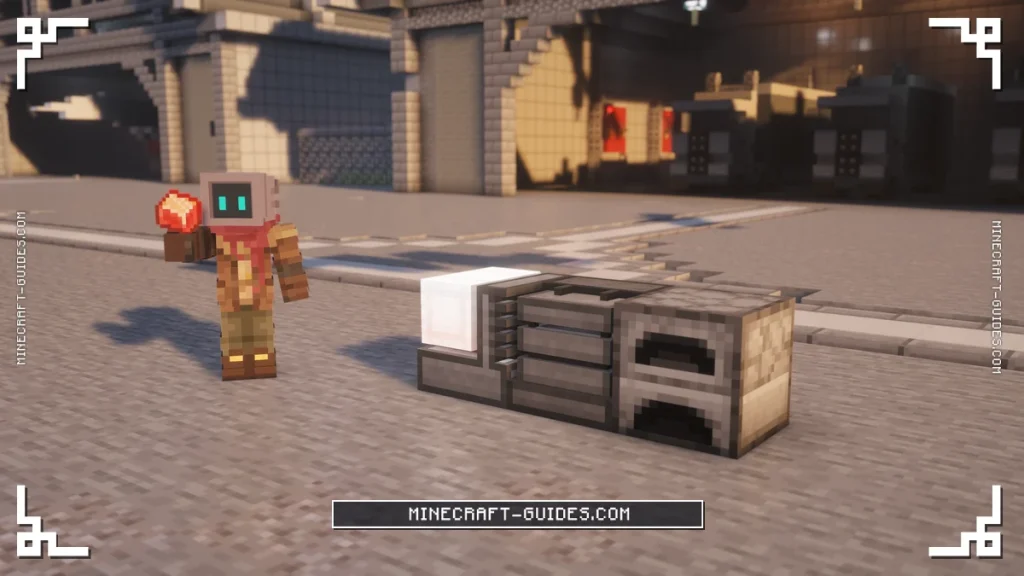
The Metallurgic Infuser is made from 4  Iron Ingots, 2 Furnaces, 2
 Redstone Dust and an Osmium Ingot, so it only takes one piece of Osmium to get going. It needs power to run, and the
 Heat Generator is the one generator that you’re able to craft without Steel.


Place the Heat Generator so that its front is touching the infuser, as it only sends power out of that one side and you won’t have any cables yet. It’ll burn Coal,  Charcoal or anything else a Furnace would. A piece of Redstone Dust in the infuser’s energy slot will work too, as each one gives enough power for one item.
Making Your First Steel
Steel takes two passes through the infuser. You’ll put an Iron Ingot in with some  Coal in its second slot, which makes
 Enriched Iron, and then you’ll put that back in with more Coal to get
 Steel Dust. The dust smelts into a
 Steel Ingot in a normal Furnace.
Each pass uses 10 mB of Carbon, and a piece of Coal is worth 10 mB whereas Charcoal is worth 20 mB. So one Steel Ingot costs you two Coal or a single Charcoal, and you’ll only need the one infuser, as it’s able to do both passes.
The same machine makes the two other parts you’ll need straight away. An Osmium Ingot with Redstone Dust gives a  Basic Control Circuit, and a
 Copper Ingot with Redstone Dust gives an Infused Alloy, which the alloys page covers along with the higher tiers.
Your First Machines
Every machine is built around a  Steel Casing, which takes 4 Steel Ingots, 4
 Glass and an Osmium Ingot. The
 Enrichment Chamber is the one to make first, as it turns an ore block into 2 dusts, and each dust will smelt into an ingot.


 2


Raw ore doesn’t quite double, as it takes 3 pieces to make 4 dusts, so you’ll get the most from ore blocks that were mined with Silk Touch. The  Crusher and the
 Energized Smelter are the other two early machines, with one for making dusts and
 Bio Fuel and the other working as an electric Furnace.
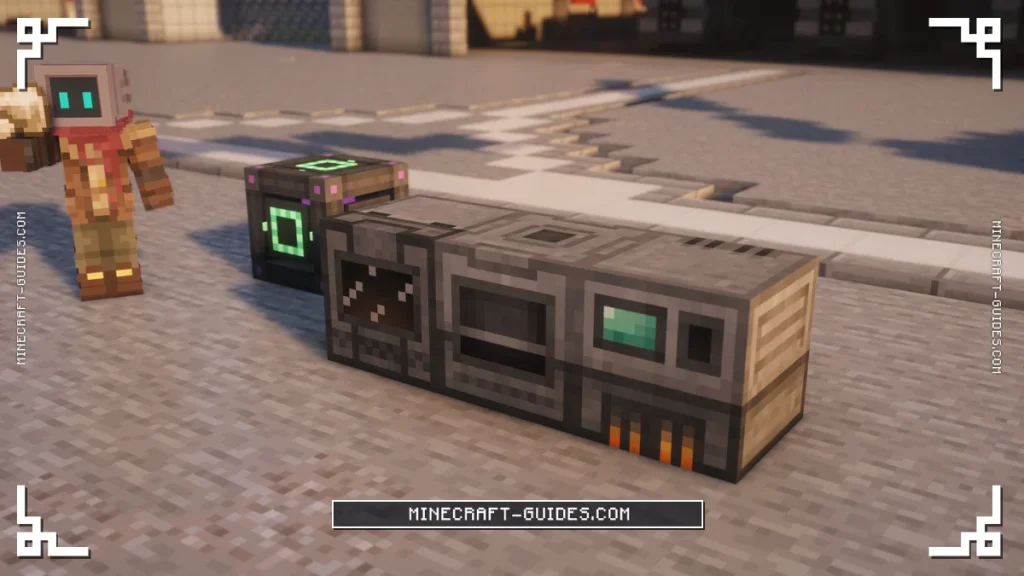
A few more machines and parts will fill out this stage, and none of them are needed for your first Steel. You’ll come back to most of them later on, so it’s enough to know for now what each one is for.
The  Osmium Compressor makes the ingots on the
 Refined Obsidian page, and the
 Combiner turns raw ore back into ore blocks. The
 Precision Sawmill gets more Planks out of each Log. Crafting components like the
 Energy Tablet are worth learning as well, as they go into a lot of later recipes.
Power, Cables and Storage
One Heat Generator will run two machines, so you’ll want something better before long.  Wind Generators are the usual next step, as they need no fuel, and Power Generation compares them with the
 Solar Generator and the
 Bio-Generator.


 8
Universal Cables carry the power, and two Steel Ingots with a Redstone Dust will make 8 of them. An Energy Cube stores what your generators make while the machines are idle, and much later on the Induction Matrix does the same job for a whole base.
Upgrades, Sides and Factories
A machine takes 10 seconds for each item to begin with, and  Speed Upgrades are how you’ll bring that down. They raise the power draw a great deal, though, so they’re best added along with
 Energy Upgrades.
Machines don’t push their items out by themselves either, as that’s switched off until you turn it on. The  Configurator page explains how the sides of a machine work, and factories are the step after that, with up to 9 items being worked on in one block.
Ore Processing and Chemicals
The Enrichment Chamber is only the first of four tiers, and the last one gives you 5 ingots from each ore block. Ore Processing has the full chain with the amounts for each step. Every tier adds a machine in front of the ones you already have, so nothing you’ve built is thrown away.
The  Purification Chamber brings that up to 3 ingots, and it runs on Oxygen. The
 Chemical Injection Chamber makes it 4 with Hydrogen Chloride, and the
 Chemical Dissolution Chamber,
 Chemical Washer and
 Chemical Crystallizer take it to 5 using Sulfuric Acid and Water.
Those chemicals come from a second set of machines. The  Electrolytic Separator splits Water into Hydrogen and Oxygen, and the
 Chemical Infuser,
 Chemical Oxidizer and
 Rotary Condensentrator make and convert the rest, which the chemicals page lists in full.
Water gets to them from an  Electric Pump, and the Brine that Hydrogen Chloride is made from comes out of a Thermal Evaporation Plant, which is the first multiblock most players build. A
 Resistive Heater will speed that plant up, and its other product is Lithium.
Ethene, Plastic and Bigger Power
The  Pressurized Reaction Chamber turns Bio Fuel, Water and Hydrogen into Ethene (called Ethylene in older versions). It’s the fuel for the
 Gas-Burning Generator, and one of those on Ethene makes more power than hundreds of Bio-Generators would.
The same machine makes HDPE, the plastic that goes into the MekaSuit, the  Meka-Tool and most of their modules. There are a couple of side machines here too, with the pigment machines for dyeing things and the
 Nutritional Liquifier for turning food into paste.
Moving and Storing Things
By now you’ll have enough machines that carrying items between them by hand gets slow. Mekanism has its own pipes for items, fluids and chemicals, and its own storage blocks as well. They’re all listed here with the page that covers each one.
Logistical Transporters and the  Logistical Sorter move items, while Mechanical Pipes and Pressurized Tubes carry fluids and chemicals. Those can be held in a Fluid Tank, a Chemical Tank or a
 Dynamic Tank, and items will go in a Bin or a
 Personal Chest.
For bigger stores, the QIO system holds huge numbers of items that you can reach from anywhere. The  Quantum Entangloporter and the
 Teleporter send things, and yourself, over any distance, including into other dimensions.
The  Digital Miner is the machine most players are working toward at this point, as it’ll pull ores out of the ground without digging any tunnels. It pairs well with a
 Dimensional Stabilizer, which keeps its chunks loaded, and a
 Cardboard Box will let you move a Spawner or a full
 Chest.
The  Formulaic Assemblicator is an automatic
 Crafting Table for the parts you make over and over, which saves a lot of time once you’re building factories. The utility blocks page covers the small ones that are left, like the
 Industrial Alarm.
Tools and Armor
Mekanism’s gear runs on power or on gas, so it doesn’t wear out the way normal tools do. The early pieces are cheap to make, and each one of them does a single job, whereas the late ones are built up from parts that you choose.
The  Atomic Disassembler is one tool that mines everything, and the
 Jetpack flies on Hydrogen while
 Free Runners stop fall damage. The
 Scuba Mask and
 Scuba Tank let you breathe underwater. For fighting there’s the
 Flamethrower and the
 Electric Bow, and the
 Robit is a small helper that follows you around and picks up items.
The end of that line is the MekaSuit and the Meka-Tool, which do very little by themselves and get their abilities from modules. Those are installed at a  Modification Station, and both need Polonium, so they come after your first reactor.
Reactors and the End Game
The Fission Reactor burns Fissile Fuel, which is made from Uranium with the help of an  Isotopic Centrifuge. It makes Steam instead of power, so it needs an Industrial Turbine beside it, and a Thermoelectric Boiler as well if you cool it with Sodium.
A reactor leaves you with Nuclear Waste, and a spill of it causes radiation, which a Hazmat Suit will protect you from. The waste is useful, though, as a  Solar Neutron Activator turns it into the Polonium that the MekaSuit needs.
After that come the Fusion Reactor, which is lit with a  Laser, and the Supercritical Phase Shifter, which makes Antimatter for the
 Antiprotonic Nucleosynthesizer. If you’re starting today, though, the Metallurgic Infuser page is the one to read next.
FAQ
There’s no guide book item in the mod, and no recipe for one, so you won’t find it in a recipe viewer. The descriptions are on the items themselves instead, which you’ll see by holding Shift and N over one, and the advancements follow the order the mod is meant to be played in.
Mine some Osmium Ore and smelt it, then craft a Metallurgic Infuser from 4 Iron Ingots, 2 Furnaces, 2 Redstone Dust and an Osmium Ingot. Power it with a Heat Generator placed right against it, make Steel, and then you’re able to build the Enrichment Chamber and the other early machines.
Put an Iron Ingot in a Metallurgic Infuser with Coal or Charcoal to make Enriched Iron, then run the Enriched Iron through with more Coal to get Steel Dust. The dust smelts into a Steel Ingot in any Furnace, so you won’t need an Energized Smelter for it.
Osmium Ore spawns in the Overworld at nearly every height, from the bottom of the world up to the tops of mountains. It’s most common in mountains above Y 72, and it needs a Stone Pickaxe or better to mine, like Iron does.