
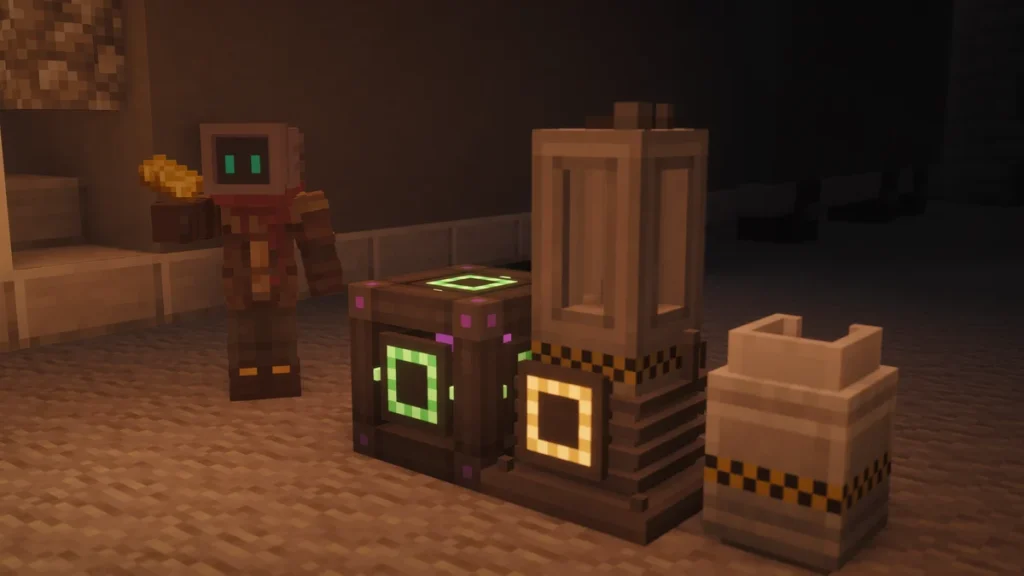
The  Isotopic Centrifuge is a Mekanism machine with only two jobs, and both of them belong to the Fission Reactor. It turns Uranium Hexafluoride into Fissile Fuel, which is the last step in making reactor fuel, and it turns the reactor’s Nuclear Waste into Plutonium.
It works on chemicals only, so there aren’t any item slots to fill. With no upgrades it’ll process 1 mB a tick for 80 FE/t (200 J/t), which is exactly the Fissile Fuel a reactor needs for a burn rate of 1 mB a tick.
How to Make It
The recipe is a  Basic Chemical Tank in the middle with an
 Ultimate Control Circuit on either side of it, and 3
 Lead Ingots across the top and the bottom. The two circuits are what make it a late machine, as they’re the highest tier of Control Circuit.


It’s 2 blocks tall once placed, so you’ll need a free block above the spot you pick. Nothing connects to its top, which means the tubes and the power all have to come in through one of its other faces.
How It Works
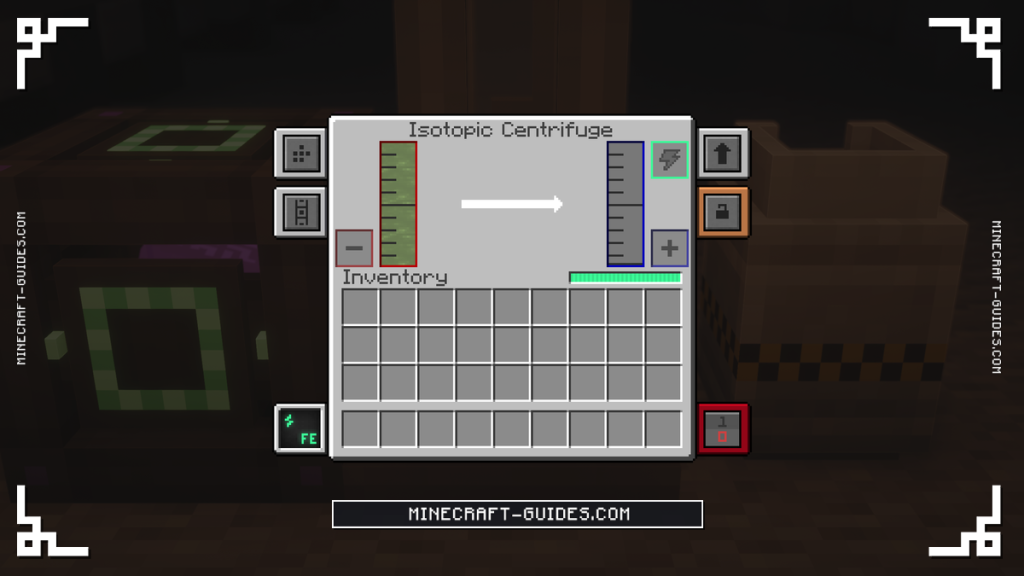
There’s a 10,000 mB tank for what goes in and another for what comes out, and the Isotopic Centrifuge will hold 32,000 FE. A chemical is piped in with a Pressurized Tube, and the machine starts as soon as it has power and room in the output tank.
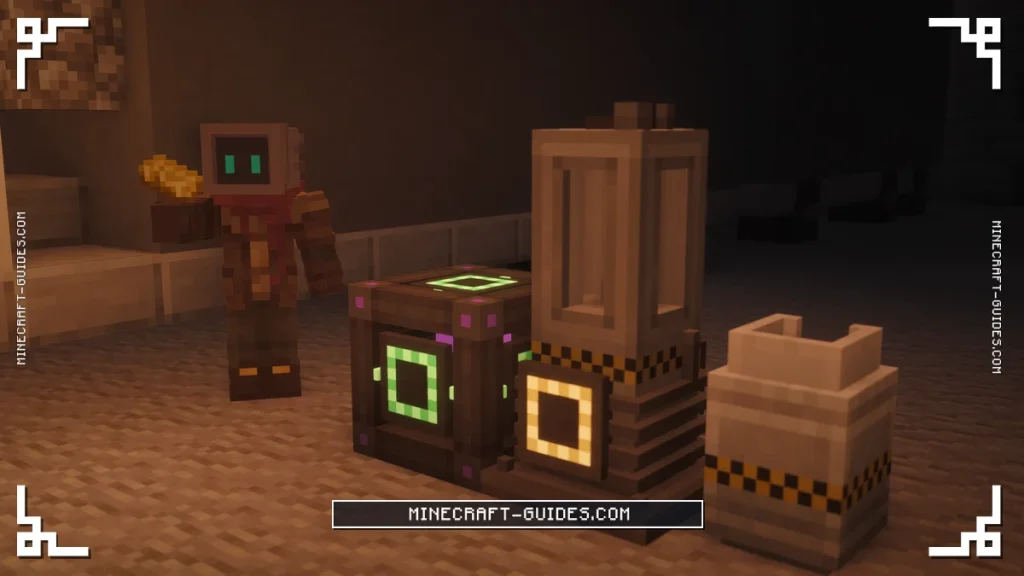
What it makes is pushed out of the front by itself, so that’s where the tube to the reactor or the next machine goes, with the input coming in from any other side. A Comparator beside it will read how full the input tank is, which is handy for shutting off the machines that feed it.
Recipes
Both recipes are shown below with the amounts for one operation. Fissile Fuel is 1 for 1, whereas Plutonium takes 10 mB of Nuclear Waste for each mB, so the two don’t run at the same pace.
| Chemical In | Chemical Out | Energy |
|---|---|---|
| 1 mB Uranium Hexafluoride | 1 mB Fissile Fuel | 80 FE |
| 10 mB Nuclear Waste | 1 mB Plutonium | 80 FE |
A machine only does one of these at a time, as it has a single input tank. You’ll want one centrifuge on the fuel line and a second one on the waste line, rather than trying to share one between them.
Fissile Fuel
Uranium Hexafluoride comes from a  Chemical Infuser, which combines Hydrofluoric Acid and Uranium Oxide, and the centrifuge finishes the job. One
 Uranium Ingot ends up as 1,000 mB of Fissile Fuel, and the whole chain is on the Fissile Fuel page.
Fissile Fuel isn’t radioactive, so it’s safe to keep in a Chemical Tank between the centrifuge and the reactor. That buffer is worth having, as the reactor will burn it faster than one centrifuge makes it once you raise the burn rate above 1 mB a tick.
Plutonium from Nuclear Waste
A Fission Reactor makes 1 mB of Nuclear Waste for every mB of fuel it burns, and the centrifuge turns 10 mB of that into 1 mB of Plutonium. It’s then used in a Pressurized Reaction Chamber with Water and  Fluorite Dust to make a
 Plutonium Pellet, which can be reprocessed back into fuel.
Nuclear Waste and Plutonium are both radioactive, and a normal Chemical Tank will refuse them. Pipe the waste from the reactor into the centrifuge, and the Plutonium straight on into the  Pressurized Reaction Chamber, with a
 Radioactive Waste Barrel for anything spare.
Breaking a tube or a machine with either of those inside is how most radiation leaks start, so it’s worth building this line once and leaving it alone. The Radiation page covers what happens if it does get out.
Upgrades and Automation
The Isotopic Centrifuge takes Speed, Energy and  Muffling Upgrades, and each
 Speed Upgrade doubles how much it does in a tick. The energy for each operation goes up as well though, so the cost rises a lot faster than the output does.
| Speed Upgrades | Fissile Fuel | Energy |
|---|---|---|
| 0 | 1 mB/t | 80 FE/t |
| 1 | 2 mB/t | 285 FE/t |
| 2 | 4 mB/t | 1,013 FE/t |
| 4 | 16 mB/t | 12,800 FE/t |
So for a reactor burning 4 mB a tick, one centrifuge with 2 Speed Upgrades costs about 1,013 FE/t, whereas four plain ones side by side cost 320 FE/t.  Energy Upgrades will bring the first number down, but extra machines are the cheaper way to keep up with a big reactor.
Once the fuel side is running, the waste is the next thing to deal with, as the reactor’s waste tank fills at the same rate the fuel burns. The Nuclear Waste page goes through Plutonium, Polonium and the  Barrels.
FAQ
It has two recipes, which are Uranium Hexafluoride into Fissile Fuel at 1 mB for 1 mB, and Nuclear Waste into Plutonium at 10 mB for 1 mB. Both are part of running a Fission Reactor, so you won’t need one before then.
One centrifuge with no upgrades makes 1 mB of Fissile Fuel a tick, which matches a burn rate of 1 mB a tick. For a higher burn rate you’ll either add a centrifuge for each extra mB, or put Speed Upgrades in one, which doubles it each time.
It only pushes Fissile Fuel or Plutonium out of its front face, so a tube on any other side won’t get anything unless you change it in the side configuration. Once the output tank holds 10,000 mB the machine will stop, and nothing connects to the top face either.
Fissile Fuel isn’t radioactive, so it’ll go into a Chemical Tank like any other chemical, and a tank between the centrifuge and the reactor is a good buffer. Nuclear Waste and Plutonium are the ones a tank refuses, as those need a Radioactive Waste Barrel instead.


