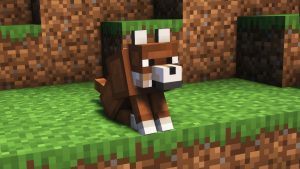
Living Things adds twenty new animals to Minecraft, scattered across the biomes you already explore, from Savanna Elephants and jungle Monkeys to Sharks patrolling the oceans. The mod deliberately keeps a vanilla art style, so every creature looks like it belongs in the base game rather than a separate pack bolted on top.
Most of these animals are peaceful wildlife you can tame, ride, breed, or farm for food and  Leather, but two of them are genuine threats hiding in the Nether. This guide walks through every animal, where each one lives, what it drops, and how to handle the two Nether bosses that give the mod its bite.
Getting Started with Living Things
Living Things has no tech tree or unlock system, so getting started simply means going out and finding the animals. The one crafted item worth making early is the  Lexicon, an in-game reference book that lists every creature the mod adds. Everything else in the mod is discovered in the wild.
Craft the LivingThings Lexicon
Book plus Lapis Lazuli
Combine a  Book with a piece of
  Lapis Lazuli in any crafting grid to make the LivingThings Lexicon. It acts as the mod’s field guide, opening a browsable list of every animal with its habits and drops. The book opens fully only when the Patchouli mod is also installed; without Patchouli it instead points you to the online wiki.




Head to the Savanna
Home of the largest animals

The Savanna is the best first stop because it holds four of the mod’s headline creatures at once: the Elephant, Giraffe, Lion, and Ostrich. These are the biggest, most useful animals in Living Things, and finding a herd early gives you tameable mounts and a steady food supply. Watch for the Lion, which is the only Savanna animal that attacks on sight.
Tame Your First Mount
Feed an Elephant an Apple

Feed a wild Elephant  Apples until hearts appear to tame it, then equip a
  Saddle to ride it and a
  Chest to give it storage. If you would rather have a fast mount, right-click any Ostrich to hop straight onto its back, no taming required. Both make early exploration far quicker than walking.
Hunt for Food and Leather
Cook raw meat for more hunger
Nearly every land animal drops Leather, which makes Living Things an excellent early Leather source before you find  Cows. The hoofed animals also drop raw meat you can cook in a
  Furnace,
  Smoker, or on a
  Campfire.
  Cooked Elephant Meat restores the most hunger of any food the mod adds, making Elephants worth hunting even after you have a mount.
Players consistently praise how these animals keep a true vanilla look and feel, so a savanna full of Elephants and Lions reads like a natural part of your world rather than an obvious add-on. Lean into that by letting herds spawn naturally instead of using Spawn Eggs.
Savanna Animals in Living Things
The Savanna is the flagship biome for Living Things, holding the four largest animals in the mod. Two of them, the Elephant and the Ostrich, double as rideable mounts, while the Lion turns the biome into a genuine early-game danger. The table below compares them at a glance before the breakdowns.

Elephant

Giraffe

Lion

Ostrich
Elephant
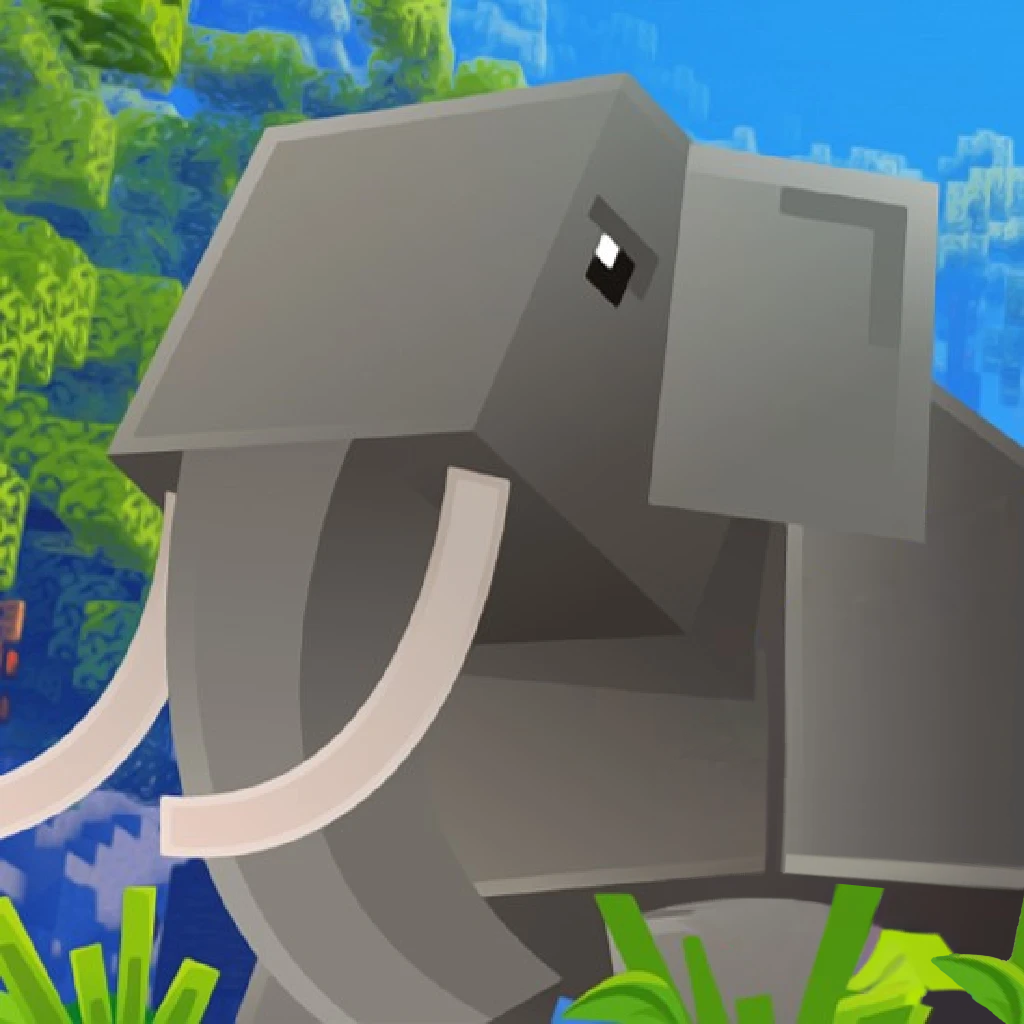
The Elephant is the toughest tameable animal in the mod, with 30 hearts of health and a 7-damage charge if you provoke it. Tame one by feeding it Apples, then place a Saddle on it to ride and a Chest on it for a portable inventory, turning it into a walking storage mount. Breed tamed Elephants with  Wheat to grow your herd.

When killed, an Elephant drops one to two Leather, a chance at a  Bone, and one to two
  Raw Elephant Meat. Cooked Elephant Meat is the most filling food in Living Things, so a small herd doubles as a reliable food farm. One quirk players quickly notice is that Elephants cannot jump, so fence them in with a single block step rather than expecting them to hop gaps.
Giraffe
Giraffes are tall, neutral grazers with 15 hearts that only fight back if you attack them first. They stick to the Savanna alongside the other large animals and are bred with Wheat, exactly like the Elephant. Each one drops one to two Leather and two to three  Raw Giraffe Meat, which cooks into a solid mid-tier food.

Roughly one in a hundred Giraffes spawns as a rare albino variant with pale coloring. It behaves identically to a normal Giraffe, so it is purely a collector’s find rather than a stronger version.
Lion
The Lion is the Savanna’s predator, a hostile mob with 10 hearts that charges and deals 5 damage on contact. Unlike the other Savanna animals it does not wait to be provoked, so an unarmored player wandering a pride can get worn down fast. Keep a  Shield or
  Sword ready when exploring open grassland.

Lions drop one to two Leather and two to three  Raw Lion Meat, and they can be bred with
  Beef,
Beef,  Chicken, or
  Rabbit. Like the Giraffe, they have a roughly one percent chance to spawn as a white variant. Tamed prides make an intimidating natural defense around a base.
Ostrich
The Ostrich is a fast-running mount you can ride without taming: right-click one to climb on and press sneak to dismount. It never fights, relying entirely on speed to escape trouble, which makes it a fun early travel option before you have horses. Breed Ostriches with Wheat to raise more.

When two Ostriches breed, one runs to a nearby  Sand block and builds an
  Ostrich Nest to lay an
  Ostrich Egg. You can collect that egg and throw it, giving a chance to hatch a baby Ostrich, similar to throwing a Chicken egg. Killing an Ostrich yields one to two
  Feathers and one to two
  Raw Ostrich Meat.
Forest, Jungle, and Plains Wildlife
Away from the Savanna, Living Things fills the wooded and grassy biomes with smaller animals that add life and a few genuinely useful drops. Several can be tamed as followers, and one is a surprisingly good  Slime Ball source. Each one below notes where to find it and what it gives you.
Monkey

Monkeys live in the jungle, climb trees freely, and wander peacefully until you hit one, at which point they fight back with a light 3-damage swipe. Tame and breed them with Apples or  Bananas, and once tamed a Monkey follows you around as a companion. They drop a little Leather and, usefully, the occasional Banana.
Koala

Koalas inhabit Jungle biomes, including Bamboo Jungle, where they slowly climb trees and walls much like Monkeys do. They are entirely passive and drop only Leather when killed, so their real appeal is decorative. Breed them with Wheat if you want a small colony near a base.
Peacock

Peacocks spawn across Savanna and Jungle biomes and fan out their colorful tail feathers as a display when threatened. Each one drops a generous one to five Feathers, making them the best Feather source in the mod. Breed them with Wheat to keep a steady supply going.
Peacocks actively seek out and trample nearby crops, so keep them well away from your farm or fence them off. A loose flock near your wheat field will happily destroy it.
Owl

Owls spawn at night across Forest biomes and come in white, brown, and black variants with equal odds. Tame one with  Seeds and it will follow you around like a loyal familiar, and you can breed them using Wheat Seeds,
  Melon Seeds,
  Pumpkin Seeds, or
  Beetroot Seeds. They drop a couple of Feathers when killed.
Raccoon

Raccoons roam Forests and Plains as neutral scavengers that eat almost anything and only turn aggressive if you strike them first. They accept an unusually wide diet for breeding: Wheat, Apple,  Carrot,
  Potato, or
  Beetroot all work. Their only drop is a small amount of Leather.
Snail

The Snail is one of the mod’s most useful passive animals despite its tiny 2-heart health pool. It spawns in Plains, Swamps, Birch Forests, Rivers, and Mushroom Fields, comes in many colors, and can even be recolored by sneak-right-clicking it with any Dye. Most importantly, each Snail drops one to two Slime Balls when killed, giving landlocked players a slime source without a swamp farm.
Shroomie

Shroomies are mushroom-covered creatures that spawn only in Mushroom Fields, coming in red and brown types. Left alone, a Shroomie wanders around planting mushrooms of its matching color wherever it finds a suitable spot, which can slowly reforest an area with fungus. They drop their matching Red or  Brown Mushroom and are bred with Wheat.
Ocean and Coastal Animals in Living Things
Living Things gives the water a proper overhaul, adding predators, decorative swimmers, and shoreline animals. Some are dangerous, some are collectible, and one hides a genuinely valuable drop. Here is what lives along the coasts and out in the deep.
Shark
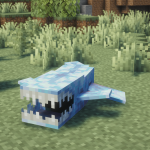
The Shark is the ocean’s apex predator, a fast hostile mob with 11 hearts that hunts you down the moment you swim too close and bites for 6 damage. It spawns throughout the vanilla ocean biomes, so open-water travel and underwater builds become noticeably riskier with the mod installed. Fight it in shallow water where you can retreat to land.
Killing a Shark drops one to two Cod, automatically cooked, plus up to three Shark Teeth. Those teeth are one of the mod’s few crafting ingredients and turn into Arrows and Bone Meal, covered in the crafting section below.
Mantaray
Mantarays glide gracefully through the ocean in groups, using a smooth swimming motion that many players compare to Phantoms moving underwater. They spawn in two colors and four sizes and are entirely harmless, existing mainly as ambient sea life. Each one drops one to two Cod when killed.
Seahorse
Seahorses are small, colorful ocean animals that drift in groups through oceans and warm or lukewarm waters, spawning in five different colors. Like a Fish, you can scoop one up with a Water Bucket to get a Seahorse Bucket and release it anywhere later, which makes them perfect for stocking a reef aquarium. They are one of the prettier ambient additions the mod offers.
Killing a Seahorse has roughly a one in four chance to drop a Heart of the Sea, along with Kelp and coral. That makes a Seahorse pod a rare renewable source of a normally buried-treasure-only item, so it can be worth harvesting a few rather than only bucketing them.
Crab
Crabs skitter along Beaches, Rivers, and Swamps as neutral animals that pinch back for light damage only if you hurt them first. They spawn in red, white, and blue colors across four sizes, giving a lot of visual variety on a single shoreline. Breed them with Cod to raise more.
A Crab drops one to two Raw Crab Meat, which cooks into a decent food, and sometimes a Crab Shell. The shell is currently a trophy drop with no crafting use, so do not go out of your way hunting for it.
Flamingo
Flamingos wade through Swamps and Rivers, often standing on one leg in classic flamingo fashion. They are peaceful and are bred with Cod or Salmon, the same fish the ocean animals prefer. Each Flamingo drops one to two Feathers and sometimes a Pink Dye, giving an easy renewable source of that color.
Penguin
Penguins live in snowy biomes such as Snowy Plains and Snowy Taigas, waddling around and chattering frequently. They breed with Cod, Salmon, or Tropical Fish, and babies grow into adults over time just like vanilla animals. Killing one drops Cod and Salmon, so a snowy colony is a modest cold-climate food source.
The Baby Ender Dragon
The  Baby Ender Dragon is the mod’s End-themed companion, a miniature version of the boss
  Ender Dragon with just 5 hearts of health. It flies around, occasionally shoots
  Dragon Breath at nearby entities, and can be tamed to become a loyal defender. It is one of the standout features players get most excited about.

You do not need a Spawn Egg to get one. Place a  Dragon Egg on top of a vertical
  Purpur Pillar and it transforms into a Baby Ender Dragon, accompanied by a dramatic ring of lightning. This gives the otherwise decorative Dragon Egg a real purpose after you beat the Ender Dragon.
Tame the Baby Ender Dragon with  Chorus Fruit, after which it follows you and retaliates against anything that attacks you, acting as a flying bodyguard. If killed, it drops an
  Ender Pearl along with a chance at Chorus Fruit and a
  Chorus Flower. Keep it out of danger, since with only 5 hearts it is fragile despite its bloodline.
Nether Knight
The Nether Knight is the first of the mod’s two Nether threats, a heavily armored warrior that spawns inside Nether Fortresses in groups of one to two. Think of it as the Fortress equivalent of a  Piglin Brute: a tanky, hard-hitting guard that turns fortress exploration into a real fight. It carries 90 hearts of health and hits for 10 damage per swing.
Nether Knight
Living ThingsWhat makes the Nether Knight especially dangerous is that every hit inflicts the Wither effect for five seconds, draining your health even after you back away. It is also immune to Wither itself, so poison-style tactics will not work. Fight it with strong armor, a Shield, and gap-closing potions, and pull single Knights away from the group rather than fighting several at once.

The payoff is worth the risk. Each Nether Knight wields an enchanted  Netherite Sword and an enchanted
  Netherite Axe, each stamped with an ominous random name like The Soul Harvester or Soul Reaper. There is a 15 percent chance to drop each weapon on death, meaning a lucky kill can hand you Netherite-tier gear surprisingly early. Knights also drop up to three Bones.
Ancient Blaze Boss Fight
The Ancient Blaze is the closest thing Living Things has to a true boss, a massive Nether creature with a boss health bar and 125 hearts of health. It is a summoned fight rather than a natural spawn, drawing clear inspiration from the community’s Wildfire mob vote concept. Beating it rewards the mod’s only piece of armor.
Ancient Blaze
Living ThingsSummon the Ancient Blaze
Jack o’Lantern on two Glowstone
To summon it, stack two  Glowstone blocks on top of each other and place a
  Jack o’Lantern on top of the stack. The blocks vanish and the Ancient Blaze appears in their place, so build the structure somewhere with room to fight. A wide, open area of the Nether or a purpose-built arena works far better than a cramped tunnel.
Survive the Charge-Up
It is invulnerable for 10 seconds
When first summoned, the Ancient Blaze spends about ten seconds charging up and cannot be damaged at all during this window, shown by sticks circling its body. Use this time to position yourself, drink potions, and line up your shots rather than wasting hits on its shield. It becomes vulnerable only once the charge finishes.
Dodge the Fireballs
Six large blasts plus small ones
Once active, the Ancient Blaze launches six large fireballs in different directions alongside a steady stream of smaller ones, so constant movement is essential. Keep strafing and use cover to break line of sight between volleys. Its direct contact damage is a modest 6, meaning the fireballs, not melee, are the real threat.
Handle the Death Reinforcements
It spawns 4 Blazes when it dies
When the Ancient Blaze finally dies, it spawns four normal  Blaze as a parting gift, so do not lower your guard the moment its health bar empties. Clear those reinforcements before collecting your loot. The boss drops two to four Blaze Rods and, most importantly, the Ancient Helmet.
The entire fight is a barrage of fire, so a Fire Resistance potion trivializes the fireball damage and lets you focus purely on dodging and dealing damage. Fighting the Ancient Blaze without it is far harder than it needs to be.
Useful Items and Crafting in Living Things
Living Things is mostly about the animals themselves, but a handful of items and drops carry real gameplay value. From a strong helmet to renewable Slime Balls, here is what to actually farm the animals for.
Cooking Animal Meat
The hoofed animals each drop their own raw meat, which you cook in a Furnace, Smoker, or on a Campfire for more hunger restoration. Cooked Elephant Meat is the most filling option, while Cooked Lion, Giraffe, and Ostrich Meat sit a step below it, and Cooked Crab Meat rounds out the seafood side. Between them, Living Things animals can comfortably feed you through the early and mid game.


Shark Tooth Crafting
Shark Teeth are the mod’s most practical crafting drop. Placing a Shark Tooth above a Stick and a Feather crafts four Arrows, giving a fresh ammo source that skips Flint and Gravel entirely. A single Shark Tooth can also be crafted directly into three Bone Meal, which is handy for farming before you have a skeleton farm.
The Ancient Helmet
The Ancient Helmet, dropped by the Ancient Blaze, is the only piece of armor Living Things adds and it is a strong one. It provides 3 armor points and 2 armor toughness, matching a Netherite helmet, with 330 durability and repairs using Netherite Ingots. Its real draw is that it grants permanent Fire Resistance while worn, which is invaluable for Nether exploration, lava work, and rematches against the Ancient Blaze itself.
Farming Animal Drops
Beyond food, several animals are worth keeping around purely for their drops. Nearly every land animal gives Leather, making Living Things a fast early Leather supply, while Snails provide renewable Slime Balls without a swamp. Peacocks are the best Feather source at up to five per kill, and Flamingos offer easy renewable Pink Dye.
Frequently Asked Questions
Stack two Glowstone blocks on top of each other and place a Jack o’Lantern on top of the stack. The blocks are consumed and the Ancient Blaze boss appears. It stays invulnerable for about ten seconds while it charges up, so use that time to prepare before attacking.
The Crab Shell is currently a trophy drop with no crafting recipe or use. It occasionally drops when you kill a Crab, but there is nothing to make with it yet, so there is no reason to farm Crabs specifically for shells.
Place a Dragon Egg on top of a vertical Purpur Pillar and it hatches into a Baby Ender Dragon. Tame the dragon with Chorus Fruit, after which it follows you and fights back against anything that attacks you. This gives the Dragon Egg a genuine use after you defeat the Ender Dragon.
Yes. A Shark Tooth placed above a Stick and a Feather crafts four Arrows, and a single tooth can be crafted into three Bone Meal. That makes Sharks a renewable source of both ammunition and fertilizer, which is especially handy in the early game.
The Elephant and the Ostrich are the two rideable animals. Tame an Elephant with Apples, then add a Saddle to ride and a Chest for storage. The Ostrich needs no taming at all: just right-click it to ride and sneak to dismount, trading storage for much higher speed.