Silent Gear transforms how you craft every tool, weapon, and piece of armor in Minecraft. Instead of fixed recipes, you build items from individual parts and choose your own materials, which directly determine the final stats and traits you get.
The result is a deep progression system with custom alloys, over 75 unique traits, a material grading system, and Starlight Charging that pushes gear stats far beyond anything vanilla crafting allows. The mod accepts almost every material from other mods too, so it grows with whatever modpack you are playing.
Getting Started with Silent Gear
Silent Gear replaces the standard crafting recipes for all tools and armor. Every item is now built from individual components called parts, and those parts are made by combining a blueprint or template with any valid material.
The same sword template works with iron, copper, or Tyrian Steel, changing the output stats dramatically while keeping the crafting process identical.
On spawn, you’ll obtain a pack of blueprints for the following recipes: Tool Rod, Pickaxes, Shovel, Axe, Hoe, and Swords.
Craft the Stone Anvil and Crude Knife
The Stone Anvil is your first required station and costs almost nothing: combine three Cobblestone and one Dirt in a crafting table. Next, craft Crude Tool Parts by combining Cobblestone, Dirt, and a Stick in the crafting table, then combine a Cobblestone with those Crude Tool Parts to produce the Crude Knife.

You only need the Crude Knife once at the very beginning, and any knife from another mod will work as a substitute if you already have one available. Place the Stone Anvil somewhere accessible, as you will return to it throughout the game for processing alloy dusts and advanced components.


 4
Make Template Boards and Shape Your First Templates
Place any Log on the Stone Anvil and right-click it with the Crude Knife. This produces Template Boards, the raw material for all starting templates.

Each template pattern mirrors its vanilla crafting shape: two Template Boards and a Stick make a Sword Template, three Template Boards and two Sticks make a Pickaxe Template, and so on for every gear type. Templates are single-use, so you will need one per gear part you craft at this stage.


Craft Gear Parts and Assemble Your First Item
Place a template in the crafting table alongside any valid material to produce a gear part. A Sword Template with two Iron Ingots yields an Iron Sword Blade, and a Tool Rod Template with two Planks yields a Wooden Tool Rod. Combine a blade and a rod anywhere in the crafting grid to produce your first Silent Gear sword.

Its raw damage matches a vanilla expected damage, but it also carries extra traits like Malleable and Flexible, which reduce durability loss per hit. If the item ever reaches zero durability, it enters a broken state rather than disappearing, and you can repair it on the spot.


 4
A Template is the same as a blueprint, except a blueprint can be reused, a template cannot. They can be used interchangeably in a recipe. We go over how to craft blueprints in the next stage.
When a Silent Gear item hits zero durability, it enters a broken state and stays in your inventory. You can repair it anywhere with a Repair Kit, without needing an anvil or a crafting table. Keep a filled kit on you at all times to avoid being left without tools mid-expedition.
Upgrade to Blueprint Paper for Permanent Blueprints
Templates are consumed after one use. As soon as you have Paper and Blue Dye, craft Blueprint Paper. Blueprint Paper slots directly into every template recipe and works identically, but is never consumed.


 4


Storing all your blueprints in a Blueprint Book keeps them organized and accessible from a single inventory slot. If your modpack gives you a Blueprint Package at world spawn, open it first, as it contains several common blueprints already made and saves you early crafting steps.
In place of the Sword Blade Template in the Sword Blade Recipe, you could replace this with a Sword Blade Blueprint instead, and this would craft the same blade, but not use the blueprint up.
All Gear Types in Silent Gear
Silent Gear provides a wider range of gear than vanilla Minecraft, covering six distinct melee weapons, a full tool set with area variants, armor with a craftable Elytra, multiple ranged options, and wearable accessories.

Every type uses the same part-based system, so your preferred materials translate into every slot. This means either just the blade and handle, or the other recipe we show.
Melee Weapons
Six melee weapon types cover different attack speed and damage trade-offs. Choosing the right weapon for your playstyle matters because the part system lets you further amplify each weapon’s strengths through material traits.
Sword
Katana
Dagger
Mace
The Sword is the balanced starting point. The Katana attacks faster for slightly less damage per swing, making it ideal for sustained fights where speed matters more than individual hit power.


The Dagger has very high attack speed at the cost of low damage per hit, which pairs especially well with on-hit traits like Venom that apply poison on each strike.


The Mace hits hardest per swing but swings slowly, rewarding precise timing over rapid exchanges.


The Machete hits harder than a sword, swings more slowly, and also functions as an axe for harvesting wood, making it a practical dual-purpose option.


The Spear has a longer reach than any other melee weapon and works well for attacking enemies through fences or from elevated positions.


Tools
Silent Gear replaces every standard tool and adds several expanded variants.

Each one is built the same way: combining a template or blueprint with a tool head and a tool rod. Every tool retains its material properties and can be repaired and upgraded indefinitely, rather than breaking.
Hammer
Excavator
Paxel
Sickle
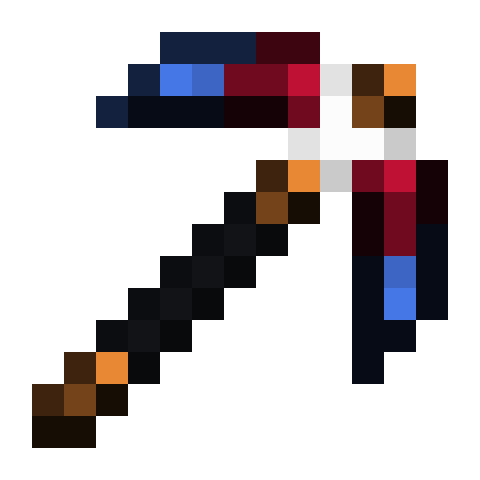
The Pickaxe works exactly like its vanilla counterpart for mining stone and ores, but it carries material traits and can be repaired and upgraded indefinitely instead of wearing out and breaking.


The Axe chops wood and doubles as a weapon, just like vanilla, while gaining the same trait, repair, and upgrade benefits that every Silent Gear tool shares.


The Shovel digs soil, sand, and gravel as normal, and like the other base tools it never permanently breaks as long as you keep it repaired.


The Hoe tills farmland in the usual way, but its material traits and endless repairability make it a tool you craft once and keep for the rest of the playthrough.


The Mattock is an all-purpose farming tool that tills and digs soil as well as chopping wood from a single item, running slightly slower than a dedicated shovel or axe in exchange for noticeably more durability.


The Paxel is a true all-in-one tool that functions as a pickaxe, axe, and shovel at once, trading a small harvest-speed and enchantability penalty for the convenience of carrying just one tool for everything.


The Hammer mines a 3×3 area of stone-type blocks with every swing, making it the fastest tool for clearing tunnels and quarrying out large rooms underground, and it accepts the Wide Plate Upgrade to widen that area to 5×5.


The Excavator does the same for soft ground, breaking a 3×3 area of soil, sand, and gravel in a single hit for rapid earthmoving, and it can also take the Wide Plate Upgrade for a 5×5 reach.


The Sickle sweeps through crops and other plants across a wide radius around the targeted block, letting you clear or harvest an entire field in a single use.


The Saw fells a whole tree by breaking just one of its blocks, as long as the logs and leaves are correctly tagged as a tree.


The Prospector Hammer doubles as a mining pickaxe but, on right-click, scans a small area in the direction you aimed for nearby ores and other blocks of interest, making it a handy underground survey tool.


Armor and Elytra
Helmet, Chestplate, Leggings, and Boots all follow the same material system as weapons and tools. Moving to higher-tier materials like Crimson Steel or Tyrian Steel produces substantially more armor, armor toughness, and magic armor than any vanilla set.

The Helmet guards the head slot and, like every Silent Gear armor piece, draws its armor, toughness, and magic protection directly from the material you build its plates from.


The Chestplate covers the torso and contributes the largest share of protection of any single piece, making it the first slot worth pushing to a high-tier material.


The Leggings protect the legs and provide the next-largest armor contribution after the chestplate, so the two are usually upgraded together for the bulk of a set’s defense.


The Boots fill the feet slot and, beyond their protection, are the natural home for movement and utility material traits on a build.


Silent Gear also lets you craft a fully custom Elytra by combining an Elytra Wings part with a Lining part. Unlike a vanilla Elytra, the Silent Gear version can be repaired with a Repair Kit and benefits from the material traits applied to its parts.


Ranged Weapons
Silent Gear’s ranged options all run on the same part system, so the materials you choose shape draw speed, projectile speed, and ranged damage.

The Bow is built from a Bow Limbs part and a Cord, and the materials in those two parts set its draw speed, arrow velocity, and ranged damage.


The Crossbow pairs Crossbow Limbs with a Cord, trading the bow’s faster firing for higher power per shot and the ability to keep a bolt loaded.


The Slingshot is an early game ranged weapon that fires Pebbles, which you get by striking Cobblestone with a hammer for nine at a time, so it never needs arrows or bolts.


Custom Arrows take their flight behavior and on hit effects from the Fletching part’s material, letting you carry your chosen material traits onto every shot.


Silent Gear Materials and Alloys
Silent Gear accepts nearly any material from vanilla Minecraft and most modded items, automatically detecting their properties. It also adds its own unique ores and alloys that provide traits and stats unavailable from any vanilla source. These custom materials form the core of mid-game and endgame progression.
Overworld Materials
Bort is a rare gem ore added by Silent Gear that spawns in deep underground overworld areas in small, isolated veins, comparable to emerald rarity. It produces a dark-colored gem used in crafting the Coating Smithing Template and certain mid-tier recipes.

Wild Flax plants spawn naturally across all overworld biomes and can be harvested for Flax String, useful for binding and cord parts. Wild Fluffy plants also appear in the overworld, dropping Fluffy Seeds and Fluffy Feathers that craft into Fluffy String and Fluffy Fabric for armor lining parts.


 9


Nether Materials
Crimson Iron Ore spawns underground throughout all Nether biomes. It requires at least a diamond-level pickaxe to mine and smelts into Crimson Iron Ingots. With 420 base durability and a Level 3 harvest tier, Crimson Iron significantly outperforms iron.

Its traits, Malleable 3, Hard 2, and Heat Resistant 4, reduce durability loss over time and protect the item itself from fire damage. It is the first upgrade you should chase after entering the Nether.
Netherwood Trees grow naturally throughout the Nether and can be cultivated from Netherwood Saplings for a renewable wood supply. Netherwood Planks and Sticks function as rod materials, and chopping Netherwood Trees occasionally drops Golden Nether Bananas, a rare item used as a Tier 3 Grader catalyst.
Setting up a Netherwood farm is the most consistent way to generate Glittery Dust for the Material Grader. Netherwood Charcoal from smelted Netherwood Planks also serves as a Nether-compatible fuel source.


End Materials
Azure Silver Ore spawns underground across all End dimension biomes and requires a high-tier pickaxe to mine. Azure Silver has an enchantment value of 29, a charging value of 1.4, and 7 magic damage, making it exceptional for magic-focused builds.
Its signature trait, Moonwalker, activates when Azure Silver makes up at least 50% of a piece of equipment and reduces gravity on boots, giving you floatier movement across the End. Starmetal Dust, crafted from Azure Silver components, is a required ingredient for endgame Starlight Charger catalysts.


 3
Alloys
Alloys are crafted in the Alloy Forge and represent the strongest materials in Silent Gear. Blaze Gold combines Gold with Blaze Powder and carries high enchantability at 24, plus the Greedy trait, but its low durability of 69 makes it better suited as a coating material than a full weapon build.
Crimson Iron
Blaze Gold
Crimson Steel
Tyrian Steel
Crimson Steel is made by combining Crimson Iron with Blaze Rods and Magma Cream: it has 2400 durability, Level 4 harvest tier, and the Flame Ward trait on armor, which grants passive fire resistance when you wear enough Crimson Steel pieces.
Azure Electrum combines Azure Silver with Gold and Ender Pearls to produce a material with 1259 durability, 37 enchantment value, and the Accelerate trait for increased attack speed. With 11 magic damage, it is the highest magic-damage material in the base game, ideal for players prioritizing spell-based synergies.
Tyrian Steel is the ultimate endgame alloy, requiring Crimson Steel, Azure Electrum, Crushed Shulker Shells, and other advanced components. It has 3652 durability, 8 attack damage, and Level 4 harvest tier. The Void Ward trait on Tyrian Steel armor launches you upward and grants slow falling when you take void damage, giving you a second chance over the void.


 4
Silent Gear Crafting Stations
Silent Gear adds several dedicated stations, each handling a specific step of the crafting or processing pipeline. Knowing which station does what prevents unnecessary trips and considerably speeds up gear upgrades.
Alloy Forge
The Alloy Forge is a multi-input furnace that combines several ingredients into alloys. It operates like a standard furnace and accepts different input quantities: using a Block of Crimson Iron instead of four ingots yields Crimson Steel with better ingredient efficiency.

The Alloy Forge processes one recipe at a time, so running multiple forges in parallel is the fastest way to produce large quantities of alloy ingots for gear production.


Metal Press
The Metal Press shapes ingots into Rods needed for tool rod components. It produces Iron Rods and Stone Rods more efficiently than crafting them by hand, which matters when you are building multiple tools at once.

It is an early-game station worth setting up alongside your first Alloy Forge to streamline bulk tool production.


Salvager
The Salvager breaks down existing Silent Gear items back into their component materials, letting you recover valuable alloy ingots from old gear rather than discarding them.

Place any Silent Gear item or part inside the Salvager to retrieve the base materials used to build it. This is especially useful when upgrading to a new tier of gear, since you can fully recover the materials from your previous set and reinvest them.


Other Stations
The Crude Mixer and Super Mixer combine fibers and strings into more complex material inputs for parts that require compound soft materials. The Refabricator processes Wool and fabrics into mixed fabric types, similar to what the Alloy Forge does for metals.
The Recrystallizer is designed for use with Silent Gems, the companion mod that adds gem-based gear materials. The Material Grader and Starlight Charger are covered in their own dedicated sections below, as both involve multi-step progression systems.
Silent Gear Part Upgrades
After assembling a piece of gear, you can add upgrade parts in a standard crafting table to modify its stats and traits without rebuilding the item from scratch. Upgrades are one of the most efficient ways to keep older gear competitive as you progress through tiers.
Tip Upgrade
The Tip Upgrade adds a small material tip to weapons and tools, boosting harvest tier, damage, and durability based on the chosen tip material. One Diamond combined with an Upgrade Base and a Tip Upgrade Blueprint creates a Diamond Tip that, when applied to an Iron Pickaxe, raises it to diamond harvest tier for the cost of a single diamond instead of three.
This lets you mine Obsidian before you have enough diamonds for full diamond tools, and players who discover this upgrade consistently reach the Nether several game days earlier than those who do not.


 4


Coating
A Coating applies a full material layer to any gear piece, including armor and weapons, but excluding the Elytra. Coatings are among the most impactful upgrades available, providing significant stat multipliers and adding traits from the coating material.
A Netherite Coating adds substantial durability and the Fireproof trait, which prevents the item from being destroyed by fire or lava.
Coatings are made using a Coating Blueprint with any material and a bottle: place the finished coating alongside your gear in the crafting table to apply it. Alternatively, create a Coating Smithing Template and apply the coating at a Smithing Table.


Grip, Binding, and Lining
Grips are added to most tools and weapons using soft materials like Leather, Wool, or Vine, providing small attack speed bonuses or trait additions from the grip material. Bindings apply similarly to weapons and tools, using materials like String or Sinew Fiber for minor adjustments, and are also required when assembling an Elytra.
Linings are the armor equivalent: when applied to any armor piece, they add minor protection bonuses and traits from soft materials such as Wool, Fine Silk Cloth, or Fluffy Fabric.


Miscellaneous Upgrades
Four functional upgrades change how gear behaves rather than just boosting stats. The Magnetic Upgrade causes gear to attract nearby dropped items toward you automatically. The Spoon Upgrade lets any Pickaxe also function as a Shovel, eliminating the need to carry both tools.
The Road Maker Upgrade turns an Excavator into a path builder, automatically converting dirt into grass paths as it digs. The Wide Plate Upgrade increases the working area of Hammers and Excavators beyond the standard 3×3, for players who want faster clearing at the cost of more material per swing.



Silent Gear Repair Kits
Repair Kits are portable containers that store materials for field repairs. Fill one by placing it in a crafting table with the repair material, then combine the filled kit with a damaged item to restore its durability.
The kit must contain the same primary material the item is built from: an Iron Sword needs iron, a Crimson Steel Chestplate needs Crimson Steel Ingots. To empty a kit and switch to a different material, combine the filled kit with a Stick in the crafting table to recover all stored items without wasting them.
Five repair kit tiers exist in Silent Gear. The Very Crude Repair Kit holds 8 material slots and provides a 30% repair efficiency bonus. The Crude Repair Kit is a slight step up.
The Sturdy Repair Kit holds 32 material slots, enough for a full mining session without running out of repair capacity, and should be prioritized as soon as you have the materials. The Crimson and Azure Repair Kits offer even higher capacities and better efficiency for endgame use when managing high-durability Tyrian Steel gear.


Silent Gear Material Grading System
The Material Grader processes raw materials and assigns them a quality grade that improves stats when used in gear parts. It is crafted using an Advanced Upgrade Base and serves as the primary way to push your existing materials toward their stat ceiling without switching to a new alloy entirely. Grades run from E at the bottom through D, C, B, A, S, SS, SSS, and MAX at the top.


Grader Catalysts
The Grader requires a catalyst to be present alongside the material being processed. Three catalyst tiers exist: Glowing Dust, made from Nether Quartz and Glowstone, is the weakest tier and tends to produce C- or B-grades.
Blazing Dust, crafted from Blaze Gold Dust (obtained by bashing Blaze Gold Ingots on the Stone Anvil) combined with Glowstone Dust, is the second tier and gives higher chances of reaching A grade. Glittery Dust, made from Golden Nether Bananas and other components, is the strongest tier and provides the best odds of producing S, SS, or SSS results.

 4
 4


 8
A critical detail: grading can only move a material’s tier upward, never downward. If a material grades as A, running it through again cannot reduce it to B.
You can safely keep reprocessing lower-grade results with Glittery Dust until they reach S or higher, without risking progress. For permanent endgame gear, targeting SSS on your main materials is worth the time investment if you have a steady Netherwood tree farm producing Golden Nether Bananas.
Starlight Charging in Silent Gear
The Starlight Charger is an endgame station that infuses materials with Starlight to boost their stats beyond what grading alone provides.

Place it outdoors with a clear view of the sky: it charges passively at night when exposed to starlight. Materials placed inside slowly absorb Starlight energy and can reach one of three Star Charged tiers, with higher tiers delivering larger stat increases to any gear built from those materials.
Three tiers of Starlight Charger exist, each requiring progressively rarer blocks arranged along a specific diagonal. The first tier uses Blocks of Crimson Steel, the second uses Blocks of Azure Electrum, and the third uses Blocks of Tyrian Steel.
A higher-tier Charger applies a more powerful Star Charged buff: Star Charged 3 dramatically increases the durability and armor values of materials processed through it. Building multiple Starlight Chargers in parallel significantly speeds up the process when you have large quantities of material to charge simultaneously.


 3
Star Charging cannot be removed or downgraded once applied. Only Star Charge your best materials once you are confident in the gear build. Use the highest-tier charger you have access to in order to maximize the buff applied.
Silent Gear Tips for Success
Switch to Blueprint Paper the moment you have Paper and Blue Dye. Templates disappear after one use, wasting resources every time you need a new gear part. Blueprint Paper is functionally identical but permanent, and crafting it early removes a frustration that catches many players off guard during their first major upgrade session.
Replace individual parts instead of rebuilding the entire item. Combine your existing gear with a freshly made replacement part at the crafting table, and it swaps out only that part, returning the old one to your inventory. Many players discard perfectly good tool rods and handles by crafting entirely new weapons when they find better materials, making the part swap system one of Silent Gear’s biggest resource-efficiency advantages.
Use the Tip Upgrade to cross-harvest tiers before you can afford full replacements. A single diamond applied as a Tip Upgrade gives an iron pickaxe diamond-harvest capability at a fraction of the normal cost. This upgrade is one of the most impactful early-game decisions available and lets you access Obsidian, Nether materials, and high-tier ores days before you would otherwise reach them.
Check material synergy before committing to a build. Hold Left Control while hovering over a gear item to see its properties, and Left Alt to see the construction breakdown. Materials with similar rarity values mix better and produce higher stat bonuses; the finished gear’s name color gives you a quick visual indicator of how well-matched your material choices are.
Combine a filled Repair Kit with a Stick in the crafting table to recover all stored materials without wasting them. Use this whenever you upgrade to a different primary material and need to swap what your kit contains.
Silent Gear FAQ
Templates are single-use and consumed when you craft a gear part from them. Blueprints are made from Blueprint Paper (Paper and Blue Dye) and are permanent, so you can reuse the same Blueprint Paper indefinitely to craft as many parts as you want.
Templates are only intended for the very start of the game before you have access to Blue Dye. Once you do, switch to Blueprint Paper and never look back.
Yes. Combine your existing gear item with a freshly-crafted replacement part in a standard crafting table. The old part is removed and returned to your inventory, and the new part takes its place.
You keep everything else intact. This means upgrading your sword blade costs only the new blade material, not a brand new handle and rod on top of it.
That is intentional when using equivalent materials. The difference is durability and survivability: the Malleable and Flexible traits on iron Silent Gear items randomly skip durability damage on hits, extending the item’s lifespan significantly compared to vanilla.
Items also do not disappear when they break, instead entering a repairable broken state. As soon as you move to Crimson Iron, Crimson Steel, or higher alloys, the stat difference becomes substantial and far exceeds anything vanilla offers.
Crimson Iron Ore spawns throughout all Nether biomes underground, so any underground mining in the Nether will encounter it. You need at least a diamond-level pickaxe to mine it.
Smelt the Raw Crimson Iron you collect in any standard furnace to produce Crimson Iron Ingots. It is one of the first major material upgrades to target after entering the Nether, since Crimson Iron gear outperforms iron with better durability, heat resistance traits, and a Level 3 harvest tier.
Tyrian Steel is the strongest overall material in the base mod, with 3652 durability, 8 attack damage, Level 4 harvest tier, and the unique Void Ward trait on armor that saves you from void death. For magic damage and enchantability, Azure Electrum surpasses it with 11 magic damage and 37 enchantment value. The true peak is Tyrian Steel graded to SSS and processed through a Tier 3 Starlight Charger: combining grading and Star Charging on the same ingots produces the best possible gear the base mod can offer.
Yes. Silent Gear is fully self-contained and does not require Silent Gems or any other companion mod to function. The Recrystallizer and some gem-specific features are only useful when Silent Gems is also installed, but everything else in the mod works with vanilla materials alone.
Silent Gear also expands compatibility automatically when other mods add new ingots and materials, allowing you to use modpack materials in gear parts without any extra configuration or datapack.